Fan service is one of the most overused elements in anime, with a multitude of series premiering each season that feature sexualized, scantily clad characters and tend to turn off viewers with risqué scenes that feel disconnected from the main story. However, some anime takes fan service to the extreme in original and innovative ways.
In most modern anime, fan service feels forced and can make the series feel shallow by objectifying characters and ruining serious scenes or exciting battles with unnecessary, gratuitous nudity. Fortunately, not only do some over-the-top anime use fan service effectively, but also there would be completely different stories without it.
Content Warning: This article contains a discussion of mature themes, including adult topics related to sexuality.
Keijo!!!
.png?q=49&fit=crop&w=500&dpr=2)
Keijo is one of the anime with the most ridiculous premises, seemingly existing solely for fan service as it showcases a bizarre sport where players in swimsuits use their breasts and butts to knock each other. However, Keijo takes itself seriously, with the fan service becoming a way to tell its story rather than simply please viewers.
Keijo embodies many sports anime clichés, with characters who train hard, intense fights, and a strong, feisty protagonist who never gives up and dreams of becoming a pro. Therefore, fan service is not only completely necessary in Keijo, but it’s also included naturally to create an entertaining, unapologetic, and hilarious shōnen parody.
Food Wars! Shokugeki No Soma

Food Wars seamlessly mixes cooking with the dynamics of shōnen battles and fan service to visually represent the pleasure of eating. In Food Wars, Yukihira Soma enters a special high school where everything is decided over culinary battles, and eating becomes an almost religious experience where the characters’ extreme bliss is portrayed as if they’re shedding their clothes.
Luckily, Food Wars‘ fan service isn’t disruptive, as it becomes a recurrent element in its narrative, and it’s balanced with humor, with many viewers who can’t help but laugh at the absurdity of these sequences. Also, even viewers who avoid fan service decide to overlook it in Food Wars in favor of enjoying its interesting underdog story and good recipes.
Prison School

Prison School is a highly contentious anime, which at first glance seems to be nothing more than fan service and obscene jokes. However, the anime proved to be quite enjoyable, as it differs from other ecchi in that instead of using sexuality in an erotic way, the fan service is so exaggerated that it becomes part of the comedy.
In Prison School, a group of boys caught spying on the girls’ bathroom are sentenced and imprisoned in the school, where they are subjected to forced labor and horrible discipline. Although it’s not for everyone, as it features depraved characters, fetishes, and brutal violence, Prison School maintains its essence as a parody anime with many moments of tension and suspense.
Golden Kamuy

One of the most underrated anime, Golden Kamuy follows a former soldier named Saichi Sugimoto who allies with the young Asirpa to find a hidden treasure together. However, despite the serious tone that fans often attribute to historical anime, Golden Kamuy is one of the most absurd seinen out there.
Golden Kamuy always finds a way to surprise viewers, being especially funny in its way of using fan service, as it features multiple scenes of shirtless, buff guys. This fan service distinguishes itself from the typical prince-type characters in shojo anime, showing a glimpse of Golden Kamuy‘s unpredictability and why it is such a crazy, action-packed adventure.
Grand Blue Dreaming

At first glance, Grand Blue Dreaming‘s premise of a college diving club seems to promise great doses of fan service, featuring characters on the beach in their bathing suits. However, the anime defies viewers’ expectations. Grand Blue Dreaming is a masterclass in how to successfully make a silly comedy, with jokes that, despite being simple, are hilarious.
Although it does feature pretty girls in bikinis and male fan service (as the first episode showcases almost from the start a strip rock, paper, scissors game), in Grand Blue Dreaming, nudity is used as a comic element. Grand Blue Dreaming always has a punchline ready and doesn’t take itself seriously, becoming one of the best comedy anime.
Rascal Does Not Dream of Bunny Girl Senpai

Rascal Does Not Dream of Bunny Girl Senpai is perhaps one of the most deceptive anime series, with a misleading title that has surprised many viewers who were unaware of its themes. In the anime, fan service scenes are few and subtle, and Mai’s iconic bunny costume serves a real purpose.
As a result, despite seeming like just another fan service anime, Rascal Does Not Dream of Bunny Girl Senpai is an incredibly touching story. The anime’s most notable traits are its emotional moments, intriguing plot, use of romance, and the way it develops the relationship between Sakuta and Mai with great delicacy.
Kakegurui

Although Kakegurui may seem like a simple gambling anime, where the tension lies in the twisted and compulsive bets, the series has multiple sexual connotations. In Kakegurui, the fan service is integrated because it seeks to demonstrate the clear sexual pleasure that characters, like Yumeko Jabami, feel when gambling, which is often reflected in their frantic expressions.
Therefore, despite having touches of mystery and suspense, Kakegurui revolves around its eroticism and daring scenes to show that the characters’ thrills are connected to their good or bad hands during gambling. However, the anime’s charm isn’t only its expressive characters but also its intense games that had earned Kakegurui widespread popularity and a live-action adaptation.
Chainsaw Man
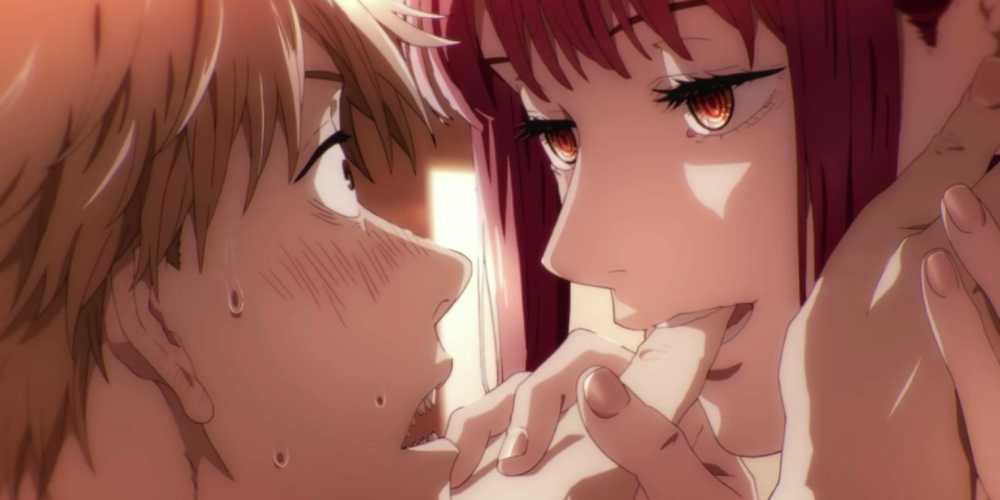
While Chainsaw Man offers fan service such as other shōnen anime, in Tatsuji Fujimoto’s work it serves a thematic purpose. Although Denji’s goal is sexual intimacy, which creates the perfect opportunity for fan service, the way it’s presented doesn’t fit the norm, nor is it as rewarding as most viewers may expect.
Denji’s hypersexuality and toxic relationships are explored throughout Chainsaw Man‘s story as the raw, unadulterated emotions of someone who grew up without meaningful personal connections. Because of this, Chainsaw Man doesn’t shy away from depicting violence and sexual themes in a blatant and intentional way. This unique approach has made Chainsaw Man a controversial and groundbreaking shōnen anime.
Panty and Stocking with Garterbelt

Panty and Stocking with Garterbelt is one of the most controversial anime series in history. However, despite its infamously explicit and vulgar nature, Panty and Stocking with Garterbelt thrives on its cheeky, crude, and suggestive humor. Following angels expelled for their behavior and who can turn their underwear into weapons, Panty and Stocking with Garterbelt offers plenty of fan service.
The biggest example of the fan service in the anime can be seen in the oversexualized magical girl transformations that cater to both male and female audiences. However, the fan service never feels overly intrusive because of the nature of the characters and the anime’s cartoonish art style, where nudity is often played as a gag.
Panty and Stocking with Garterbelt is over-the-top, visually appealing, and stupidly funny for those who enjoy its raunchy humor. Moreover, its atmosphere of senseless anarchy and mind-blowing cliffhangers makes it one of the most daring animes, where viewers never know what to expect.
Kill la Kill

Unlike most ecchi anime where the excessive skin shown intends to appeal to a certain audience, fan service plays a vital role in Kill La Kill, and taking it away would change its story completely. Furthermore, the absurd amount of fan service in Kill la Kill and the way it’s depicted often make it feel more like comic relief than gratuitous.
Looking beyond the characters who take off their shirts, the uniforms where they’re almost half-naked, or the crazy transformation sequences, Kill la Kill is an unrestrained anime with an interesting apocalyptic world, jarring fight scenes overflowing with madness and epicness, unexpected twists, and humorous gags that made it an enjoyable surrealist experience with the mark of Studio Trigger.

- Release Date
-
2013 – 2014
- Directors
-
Akira Amemiya, Masahiko Otsuka, Hiroyuki Imaishi
- Writers
-
Kazuki Nakashima
- Franchise(s)
-
Kill La Kill