The 1990s doesn’t have a clear horror movie identity, but there are some films that best sum up the decade. Since horror hit the mainstream in the 1930s, each decade has left a permanent mark on the genre, and can usually be defined by trends that were popular during that time.
Coming out of the slasher-obsessed 1980s, the ’90s never really got to establish itself as a horror decade with any easily recognizable trends. The early part of the decade was mostly a rehash of popular movies from previous years, while the latter half had so many disparate ideas that there were no clear patterns.
No one specific horror subgenre dominated the 1990s, and slashers were just as prevalent as supernatural thrillers or good old-fashioned monster movies. There was something for every taste, but that also meant that horror was somewhat ill-defined. However, there are a handful of horror films that are quintessential ’90s, and are the closest the decade came to having trends.
Tremors (1990)

The first year of the 1990s was rough when it came to horror, and the boom of the ’80s had led to a creative recession. However, Tremors arrived to deliver a fun and action-packed monster story with stellar writing and an even better ensemble cast. The well-defined rules made the subterranean monsters frightening, and Tremors is a nearly perfect movie.
It also helped to kick off a ’90s monster movie revival, and successors like Anaconda or Lake Placid owe a debt of gratitude to the Kevin Bacon cult classic. Besides reinvigorating a subgenre, Tremors also set the tone for the comedic edge of ’90s horror, with many of the best films of the decade having some laughs too.
The Silence Of The Lambs (1991)

Horror is rarely taken very seriously by critics, but films like The Silence of the Lambs toed the line between the critically-acceptable “thriller” and straight horror. The Oscar-winner is both a thriller and a horror film, and its realistic depiction of an FBI investigation only adds to the terror as everything feels like it could actually happen.
Anthony Hopkins steals the show as Hannibal Lecter, and the role has come to define his legendary career. The mystery elements are punctuated with shocking twists, and Clarice’s journey into the world of serial murder is more horrifying than any supernatural terror. The horror thriller was soon all the rage, and movies like Copycat actually did it right.
Candyman (1992)

After years of repetitive slasher flicks, the ’90s saw the trend begin to evolve into something deeper. Candyman was one of the first to try to do something extra with the subgenre, making a commentary about racism and class division in inner cities. The titular baddie wasn’t hacking up teens for fun, he symbolized something much more nefarious.
The late Tony Todd‘s turn as Candyman earned him a spot in the horror movie hall of fame, and he understood the subtlety behind the character. It’s not perfect, but Candyman showed how old could be made new again with clever ideas. The ’90s struggled to establish its own horror identity, so many filmmakers simply improved upon earlier trends.
The Craft (1996)

Horror itself has always been something of a subculture, and some ’90s horror films explored that intersection. The beloved witch movie, The Craft, melded a lot of what is so nostalgic about the ’90s, with iconic fashions and a truly memorable coming-of-age plot. Few films so completely encapsulate the decade, but The Craft isn’t dated.
It’s hyperstylized to the point of resembling a mid-’90s music video, and it made witchcraft scary again in a decade that softened the image of witches in general. The Craft had its problems, but it was undeniably modern. The middle years of the ’90s were where the genre hit rock bottom, but movies like The Craft started an upward swing.
Scream (1996)

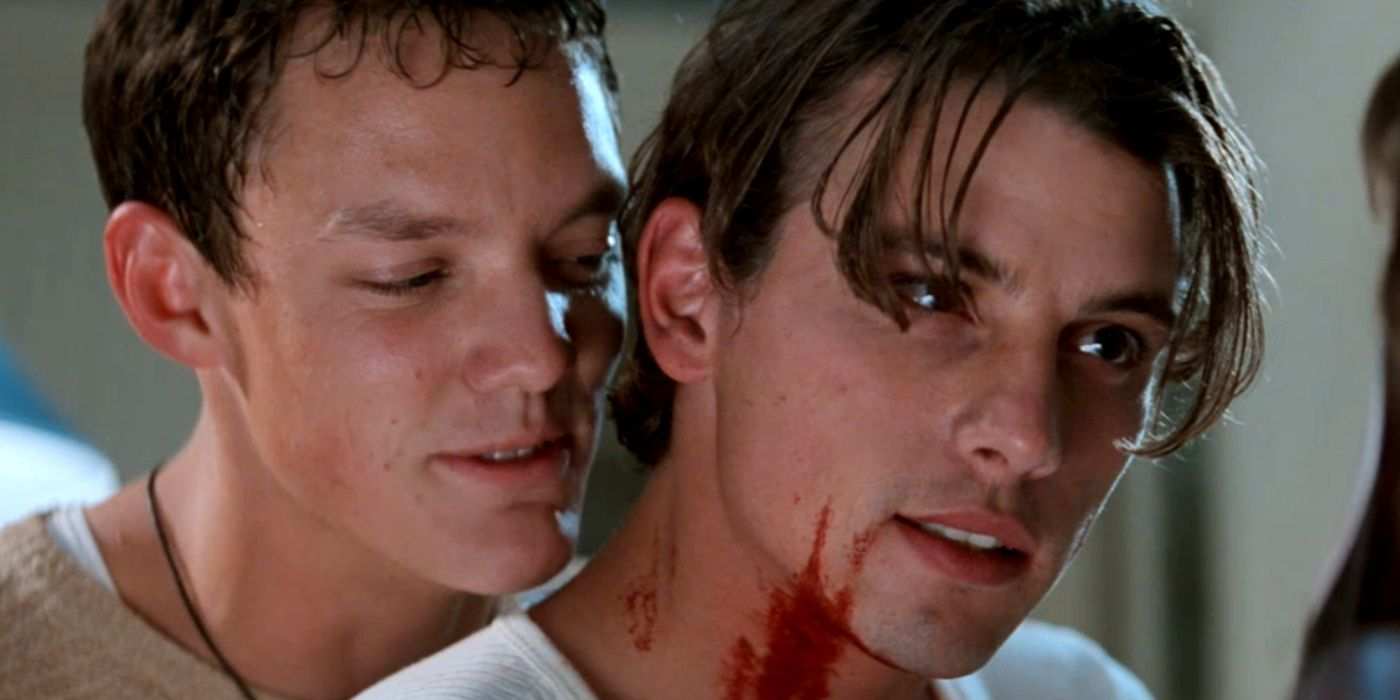
Director Wes Craven made his mark on horror in the ’80s with A Nightmare on Elm Street, and he returned in the ’90s to do it again with Scream. Poking fun at obsessive fan culture and the overexposure of horror films in general, Scream revived the mystery slasher genre with a distinctly cynical edge.
Besides the satire, Scream also delivered effective chills, and Ghostface has since become one of the most recognizable slasher villains. Craven saw that horror had become stagnant, and he kicked off a brand-new era by effectively putting the previous one away for good. A slew of new slashers would follow, but they mostly missed the point of Scream.
Cube (1997)

When listing horror films that most define the 1990s, the Canadian indie flick Cube probably isn’t the first that comes to mind. However, it predicted several horror trends, and is also an effectively chilling film that never fails to surprise. Its simple premise is elevated by strong attention to detail, and it’s as surreal as it is conventionally frightening.
Cube uses every dollar constructively, and the focus on the cast pays off. It represents rising fears about the encroachment of technology and how the cruel logic of machines can destroy humanity. Those themes would only get more prescient as the ’90s wore on and technology began to encroach more and more into daily lives.
I Know What You Did Last Summer (1997)

Besides Scream, I Know What You Did Last Summer is the quintessential slasher film from the latter half of the 1990s. It isn’t particularly clever, nor is it trying to subvert genre expectations, but it still manages to continue the ongoing narrative of slasher films without feeling tired or cliche.
I Know What You Did Last Summer was followed by three sequels, including the 2025 eponymous film.
A cast of young stars like Sarah Michelle Gellar and Jennifer Love Hewitt firmly planted it in 1997, and it has a slightly humorous edge because it was written by Kevin Williamson, who also penned Scream. I Know What You Did Last Summer is no masterpiece, but it delivered something new that wasn’t a previously established franchise.
Bride Of Chucky (1998)

Child’s Play introduced new slasher icon Chucky in the final few years of the ’80s, and the killer doll languished in two boring sequels at the beginning of the ’90s. Finally, Bride of Chucky completely flipped the script on the slasher franchise, and introduced a tongue-in-cheek sense of humor that still carries it forward today.
Shattering the fourth wall, Bride of Chucky embraces the title character’s iconic status, and weaves in meta-narratives to its supernatural plot that even pokes fun at other horror movies. This would have a profound impact on the genre for the remainder of the ’90s, with the trend of self-aware horror culminating in outright spoofs like Scary Movie.
Ring (1998)

International horror films can have a profound impact on the American movie market, and 1998’s Ring might be the most influential foreign horror flick of the decade. The distinctly Japanese ghost story was unlike anything being made in America at the time, and is still bone-chilling. It embraced (then) modern technology, which added elements of techno-horror as well.
Home video and the proliferation of cheap electronics are some of the inspirations for Ring, and few films were as firmly rooted in their decade. The mundane environments are extra creepy, as everyday objects could become conduits for unspeakable horrors. Future horror films would try to copy the spirit of Ring, but none could be quite so prescient.
The Blair Witch Project (1999)

It took until 1999, but The Blair Witch Project finally arrived to summarize the decade of horror. The groundbreaking found footage movie relied more on suspense than actual scares, and the mystery surrounding the film’s production was as compelling as the final product itself. The microbudget feature conquered the world, and is still iconic today.
The Blair Witch Project was one of the first movies to properly use the internet as a marketing tool, spreading its own urban legend online. It intentionally kept audiences guessing about what was real or not, and it launched the found footage genre, albeit about a decade later.
As for defining the 1990s, The Blair Witch project is the only horror movie from the decade that was wholly original, and did something that was altogether new. It embraced the DIY attitude of the indie film boom, and was an important moment in time that will never be replicated.