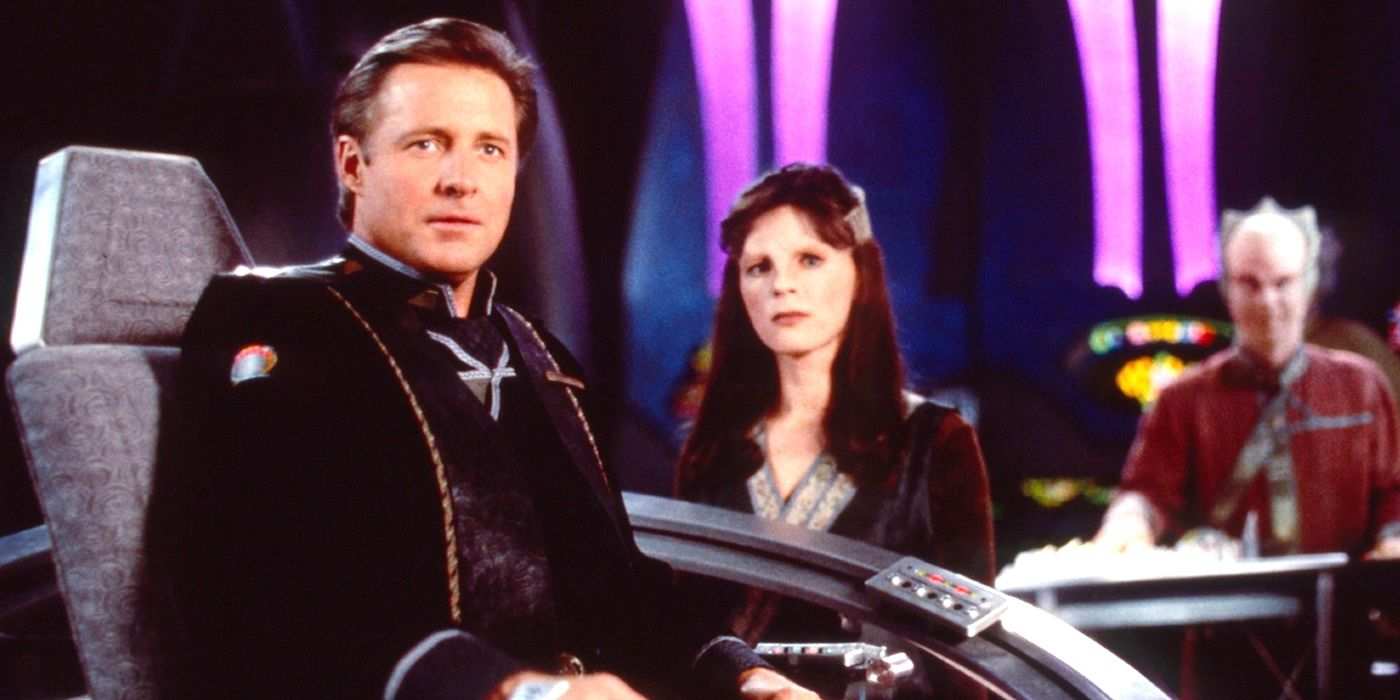
When you rewatch Babylon 5, there’s a major shift in the world that you thought you knew. You start to realize you’re not just watching a series with continuity. You’re watching a show that was planned for you to remember. A show that actually trusted you to connect the dots. That wasn’t the norm in the early ’90s. Genre TV back then was mostly episodic stories. Babylon 5 didn’t believe in disposable chapters. J. Michael Straczynski came in with a five-year novel and dared TV to keep up with him. And somehow, against schedules and budgets and network chaos, it did.
You can trace the lineage if you squint a little. Shows like The X-Files, Deep Space Nine, and even early Buffy the Vampire Slayer dipped their toes into long-form storytelling, flirting with arcs while still keeping one foot in episodic safety. They were testing the air. Babylon 5 wasn’t testing anything. It was already halfway down the road with the map unfolded, convinced that TV could handle a story with a spine instead of a string of reset buttons. And it still feels fresh.
A Five-Year Plan in a Medium That Didn’t Do Plans

At the time, the pitch for Babylon 5 seemed like it would never work: one story told over five years, mapped out ahead of time, with major turns scripted well before the actors ever said them out loud. It wasn’t a gimmick. It was a gamble. Most sci-fi shows in that era were built for reruns, not long arcs. You needed syndication money. You needed casual viewers. You needed episodes that made sense, even if people skipped two weeks. Babylon 5 just…didn’t care. In the most confident way.
Straczynski treated television like a novel that happened to move. The kind where, if someone dies, they stay dead. If someone betrays a friend, the bruise lingers. If a planet falls into war, the fallout doesn’t vanish after the commercial break. You feel the story accumulating weight across seasons.
Even the political arcs carried their own weather systems — the creeping authoritarianism back on Earth, the rising tensions among the alien governments, the slow shift from diplomacy to brink-of-war paranoia. Characters didn’t survive those currents unchanged. They hardened. Broke. Grew. Slipped into darkness or dragged themselves back out of it. What still hits is how ordinary it all felt on-screen. No fancy, antiseptic future, just the quiet confidence of a show that knew exactly where it was going long before you did.
Canon That Lived Beyond the Screen

Babylon 5 didn’t stop at the episodes. That was the shocker. Most tie-in media back then existed in a kind of limbo — fun, harmless extras that never touched the “real” story. Babylon 5 didn’t treat its novels, comics, or TV movies that way. They mattered. Characters introduced in print walked into the show with histories that stayed intact. Storylines seeded in the novels threaded back into the series like stitches. Even the network movies weren’t padding; they expanded corners of the universe that the main narrative kept referencing with a straight face.
It was one of the first times a TV show treated its expanded universe as an actual extension of the canon instead of a merch pipeline. Babylon 5 walked so later juggernauts could run — the Battlestar Galactica reboot, The Expanse, even the current wave of serialized fantasy TV owes a little something to that interconnected ambition.
At the time, no one really had a word for it. “Transmedia” wasn’t in the pop-culture bloodstream yet. But the DNA is obvious now. Babylon 5 was playing a long game across platforms before anyone realized that could even be a strategy.
A Space Opera That Quietly Redefined What TV Could Be

When people talk about Earth-shaking shows, Babylon 5 rarely gets the bragging rights it deserves. Maybe it’s because it wasn’t flashy in the way later prestige sci-fi became. Maybe it’s the early CGI, or the syndicated-TV budget, or the uneven reception when it first aired. But if you watch it now — really watch it — you can feel how ahead of the curve it was.
Look at the breadcrumb trails that later TV shows built entire reputations on: long-form political storytelling, season-long myth arcs, serialized emotional consequences, “no-reset-button” character work, and worlds that expand with every chapter instead of resetting to factory settings. The edge-of-your-seat viewing as the Shadows loomed felt like once they were done in space, they were coming for us. That’s Babylon 5’s playbook.
And it wasn’t loud about it. That’s part of its charm. The show wasn’t trying to start a revolution. It just wanted to tell a good story from beginning to end, without the guardrails TV usually demanded. It trusted its audience at a time when networks didn’t think viewers could track anything more complex than a two-parter.
The Blueprint Future Shows Still Follow
Thirty years later, the show’s fingerprints are everywhere — in the structural ambition of Battlestar Galactica, in the patient worldbuilding of The Expanse, even in the way modern fandom expects a series to reward long-term attention. Babylon 5 didn’t just break the mold. It quietly replaced it with something sturdier. Something braver. Something that assumed people were smart enough to notice the ripples a single choice could make five seasons later.
For a scrappy, ambitious space opera made on tight budgets and tighter timetables, that’s one hell of a legacy. Actors like Michael O’Hare and later Bruce Boxleitner played the commanders of the station with confidence and trepidation, cautiously navigating political waters to avoid war. But when the war came, everyone rose to the occasion, and you were along for the roller-coaster ride.
It’s bold. It’s earnest. It’s messy in places. But it’s also one of the first shows to prove that sci-fi television could think ahead — and trust that its audience would follow, season after season, into the long night of its story.