Two popular currently airing K-dramas that have been the center of controversy in China are tvN’s Bon Appetit, Your Majesty, also trending on Netflix, and Disney+’s Tempest.


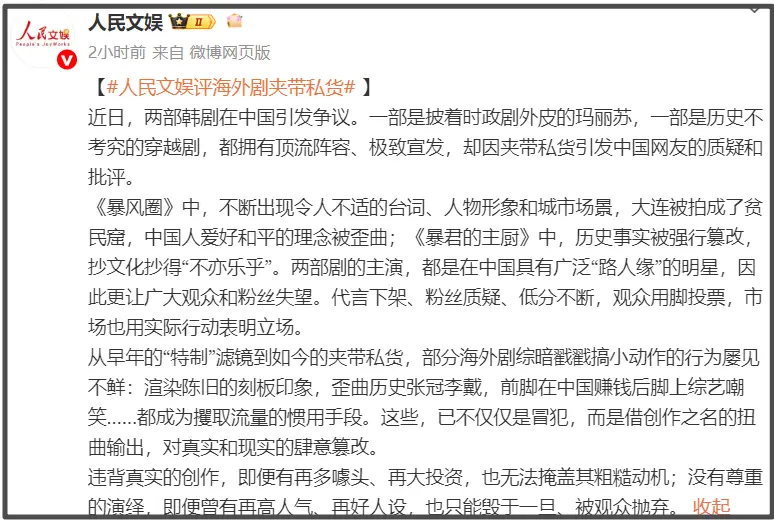
Although these two dramas are not “officially” available in China, Chinese netizens have expressed strong dissatisfaction, believing that both series take jabs at China. The controversy escalated to the point that People JoyWorks — an entertainment content platform operated by Global People magazine of People’s Daily, the official newspaper of the Central Committee of the Chinese Communist Party — commented on the issue, sharply criticizing the Korean dramas for “smuggling private agendas.”
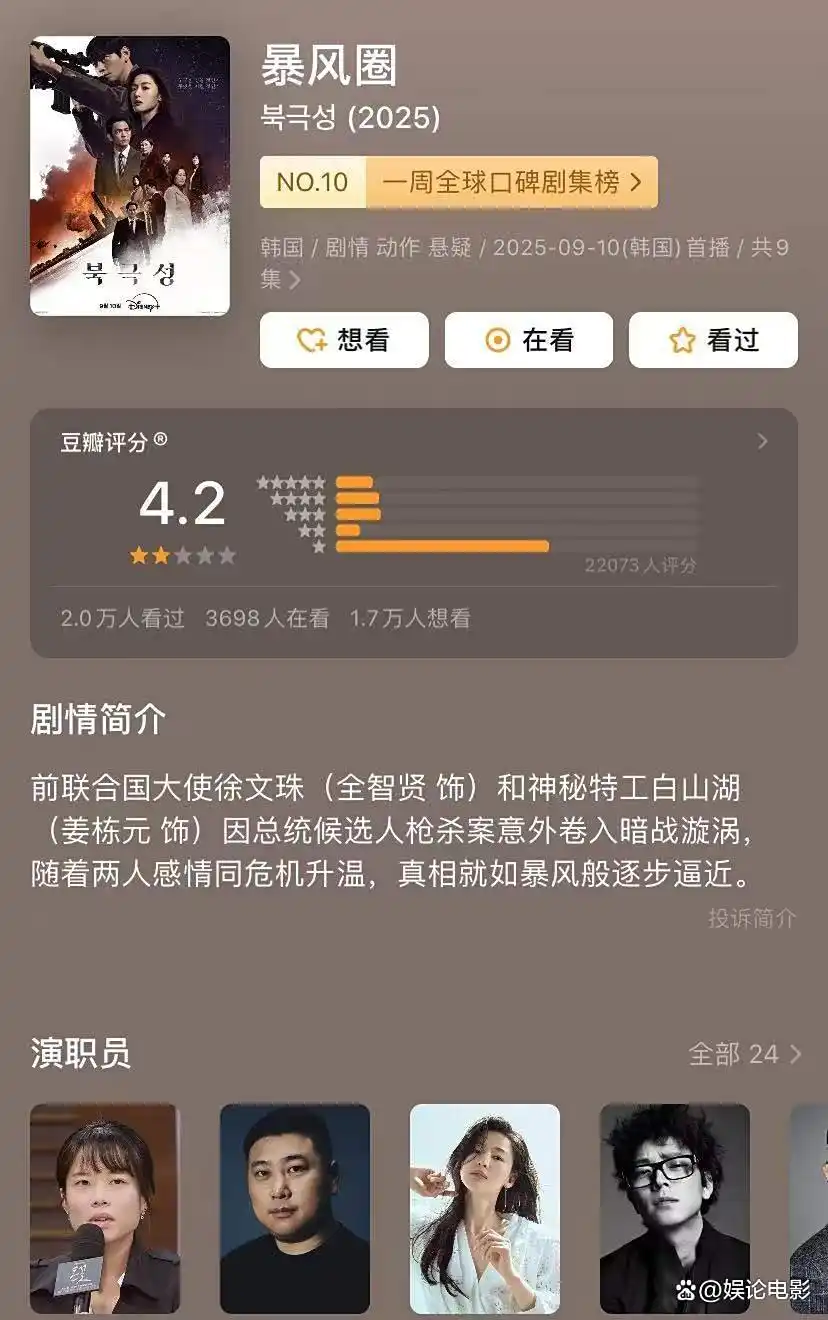
Tempest and its lead actress, Jun Ji Hyun, faced intense backlash in China. Scenes such as officials seated at a table set upon a red carpet with yellow stars, resembling China’s flag; China’s coastal city Dalian depicted as a rundown shantytown; and the scene where Seo Mun Ju (Jun Ji Hyun) says, “Why does China prefer war?”, implying China is a war-mongerng nation, were perceived as outright provocations against the country and its people. Soon after the episodes aired, Chinese netizens — considering the actress’s silence on the matter — called for boycotts against brands for which Jun Ji Hyun, one of the Korean actresses much beloved by C-netz for her performance in My Love from the Star, serves as a brand ambassador. Subsequently, her advertisements for luxury brands Louis Vuitton (LV), La Mer, and Piaget have reportedly been removed from the respective Weibo accounts.
Tempest initially had a Douban rating of 7.1, but after the controversy, the score plummeted, and it has now fallen to 4.2.
tvN’s hit series Bon Appetit, Your Majesty, starring Lim Yoon A and Lee Chae Min, also faced considerable heat from Chinese netizens. The show currently has a Douban rating of 6.

The time-slip fantasy portrays the chief Ming dynasty envoy as a greedy official, and even humiliated and headbutted by the Joseon king, and another envoy is accused of stealing chilli peppers. Chinese netizens criticized the drama for its “historical inaccuracy”, asking, “How could Ming dynasty envoy possibly be reprimanded by a small country’s monarch?” These scenes sparked further outrage among Chinese viewers.
The leads of both dramas are celebrities who enjoy considerable popularity among Chinese audiences, which makes dissatisfaction among them even greater. The controversies have revived talk surrounding the unofficial ban China has imposed on Korean entertainment for close to a decade.
Although China has never officially acknowledged such a measure, the sharp decline in Korean entertainment imports since 2016 is largely seen as retaliation for South Korea’s deployment of THAAD, a U.S. anti-missile defense system, on its territory, which China sees as a threat to its national security.
In recent months, there have been signs of tensions easing, with some Korean artists even staging concerts in China. However, the uproar surrounding Tempest and Bon Appetit, Your Majesty has further intensified frictions in the pop culture sphere between the two countries. On online community platforms, Korean netizens labeled Chinese viewers as “overly sensitive” and also called them out for accessing Korean content through unofficial means as Disney+ and other foreign streaming services are not officially available in China, while Chinese audiences are now calling for stricter enforcement of the “ban on Hallyu Wave” and for resistance against what they see as anti-China sentiment in Korean productions, while encouraging Chinese entertianment among locals.
Source: People’s JoyWorks (Weibo), Tianyan News, Seoul Shinmun