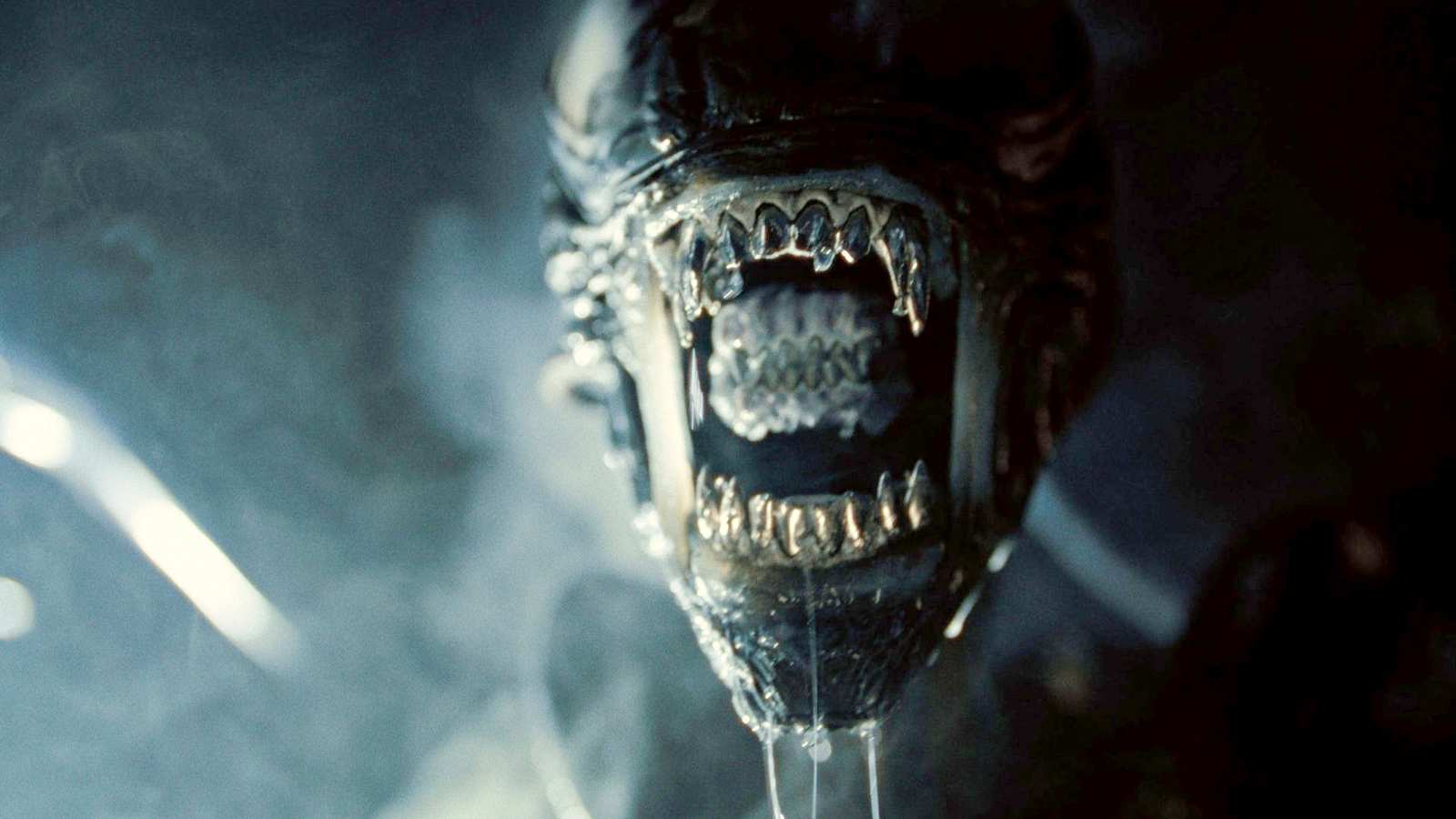
While James Cameron’s Aliens is regarded as one of the greatest installments in the Alien franchise, it significantly damaged the Xenomorph’s legacy as established by Ridley Scott in the original 1979 film. But now, Alien‘s new era is finally restoring the monster’s legacy.
In Alien vs. Captain America #1 by Frank Tieri and Stefano Raffaele, readers are transported back to World War II in the Marvel Universe, where Captain America stands as the only hero capable of saving the world from theNazi-affiliated Hydra. And this time, Hydra has a new weapon: Xenomorphs.
Hydra finds the Xenomorphs in an ancient tomb in Attlian built by the Inhumans. Back when the Inhumans were worshiped as gods, the Xenomorphs spread among them, killing every Inhuman in Marvel continuity. A chamber of Ovomorphs remained entombed, and Hydra took them for their own gain despite ample warning.
Both the humans who lived near the Attilan tomb and the engravings in the tomb itself regarded the Xenomorphs as “demons” and “killers of gods”. The Xenomorphs’ mysterious and cosmically horrific reputation preceded the species, as did their almost god-like power to kill anything they encounter, even the ‘gods’ themselves.
James Cameron Downgraded Alien’s Xenomorphs Into ‘Space Bugs’

Fans were introduced to Xenomorphs in Ridley Scott’s original 1979 film, Alien. In it, the Xenomorph was regarded as a mysterious and ancient beast born from death and virtually unstoppable. The movie was a great example of cosmic horror, and the Xenomorph’s potential only scratched the surface.
However, everything changed when James Cameron made Aliens. To be clear, Aliens is a badass film that gave fans a ton of lore regarding the Xenomorph species (including hive hierarchy and the Queen Xenomorph herself). Unfortunately, Aliens also took the franchise in the wrong direction.
Rather than leaning into the cosmic horror elements introduced in Alien, Aliens transformed the Xenomorphs from nearly unstoppable, almost demonic creatures into fairly easy-to-kill ‘space bugs’. Aliens showed that, with the right weapons, entire hordes of Xenomorphs could be killed with a single shot.
Not only that, but the film turned them into a species not too dissimilar to ants or bees (something the characters in the movie say outright). No longer was the Xenomorph a being of cosmic horror, but rather little more than a giant ant in space.
How Alien’s New Era is Repairing the Xenomorphs’ Reputation

Alien vs Captain America is one of the latest comics featuring the Xenomorphs, and while it’s not canon in the Alien universe (and is instead a fun crossover), it still manages to capture the aliens’ original horror and works to repair their legacy.
The fact that the Xenomorphs managed to wipe the Inhumans off the map proves that they are more dangerous than in Aliens. If a team of Colonial Marines can kill Xenomorphs, it stands to reason that super-powered Inhumans could as well. Except the Inhumans couldn’t, and that’s a good thing.
The terrifying power of the Xenomorphs was too much for the Inhumans to handle, which alone helped restore their reputation as beings of cosmic horror, as they are regarded as “demons” and “killers of gods.”
This portrayal of the Xenomorphs is just the latest step in repairing their perception in the eyes of fans, removing the idea that they are just ‘space bugs’ and reinforcing the idea that the Xenomorphs are more akin to eldritch gods capable of bringing the entire universe to its knees.
Alien Has Been Repairing the Xenomorphs’ Legacy for Many Years

Since Marvel Comics acquired the Alien comic book franchise (coinciding with Disney’s purchase of 20th Century Fox in 2019), considerable efforts have been made to rehabilitate the Xenomorphs’ reputation.
The best example can be found in Phillip Kennedy Johnson’s multi-volume run on Alien, which laid the groundwork for Alien‘s comic book franchise moving forward. It was during this era that a particular character was introduced, who almost single-handedly reinstated the Xenomorphs’ cosmic horror: The Woman in the Dark.
The Woman in the Dark, also known as the Goddess, is a cosmic entity from another dimension that takes the form of a human woman with Xenomorph-like physical characteristics. The Goddess represents the inevitability of the Xenomorphs’ expansion across the universe, especially as it coincides with that of humanity.
The existence of the Goddess implies that the origin of the Xenomorph is interdimensional in nature, as if they are some ancient evil that seeped into the universe with the sole purpose of corrupting it. Every time the Xenomorphs are referred to as ‘demons’ or ‘gods’, it reinforces that implication.
Alien Finally Figured Out Xenomorphs are Way Cooler than ‘Space Bugs’

When Xenomorphs were introduced in 1979’s Alien, the species was shrouded in mystery, and any further exploration should have been rooted in the type of almost Lovecraftian cosmic horror fans are seeing in the more recent comic series, instead of what fans got in Aliens. And Alien finally realized that.
James Cameron transitioned the Alien franchise from horror to action, while introducing a more grounded explanation for the Xenomorph species, inspired by the reproductive cycle and hive hierarchy of certain insects.
Again, Aliens is an entertaining movie, and it remains a great entry in the franchise. However, that doesn’t detract from the damage it did to the Xenomorph’s legacy so soon after the creature was introduced. However, great efforts are now being made to repair that reputation.
Alien vs Captain America might just be a fun, non-canon crossover, but the way it regards Xenomorphs builds on the species’ larger legacy as beings of cosmic horror, not merely ‘space bugs’, thereby rectifying the damage James Cameron did to the legacy of the Xenomorph in the Alien franchise.
Alien vs Captain America #1 by 20th Century Studios is available now.

- Movie(s)
-
Alien, Aliens (1986), Alien 3 (1992), Alien: Resurrection (1997), Prometheus (2012), Alien: Covenant (2017), Alien: Romulus (2024)
- Cast
-
Sigourney Weaver, Tom Skerritt, Veronica Cartwright, Harry Dean Stanton, John Hurt, Ian Holm, Yaphet Kotto, Michael Biehn, Paul Reiser, Lance Henriksen, Carrie Henn, Bill Paxton, Charles S. Dutton, Charles Dance, Pete Postlethwaite, Winona Ryder, Ron Perlman, Dan Hedaya, Noomi Rapace, Charlize Theron, Idris Elba, Guy Pearce, Michael Fassbender, Katherine Waterston, Billy Crudup, Danny McBride, Demián Bichir