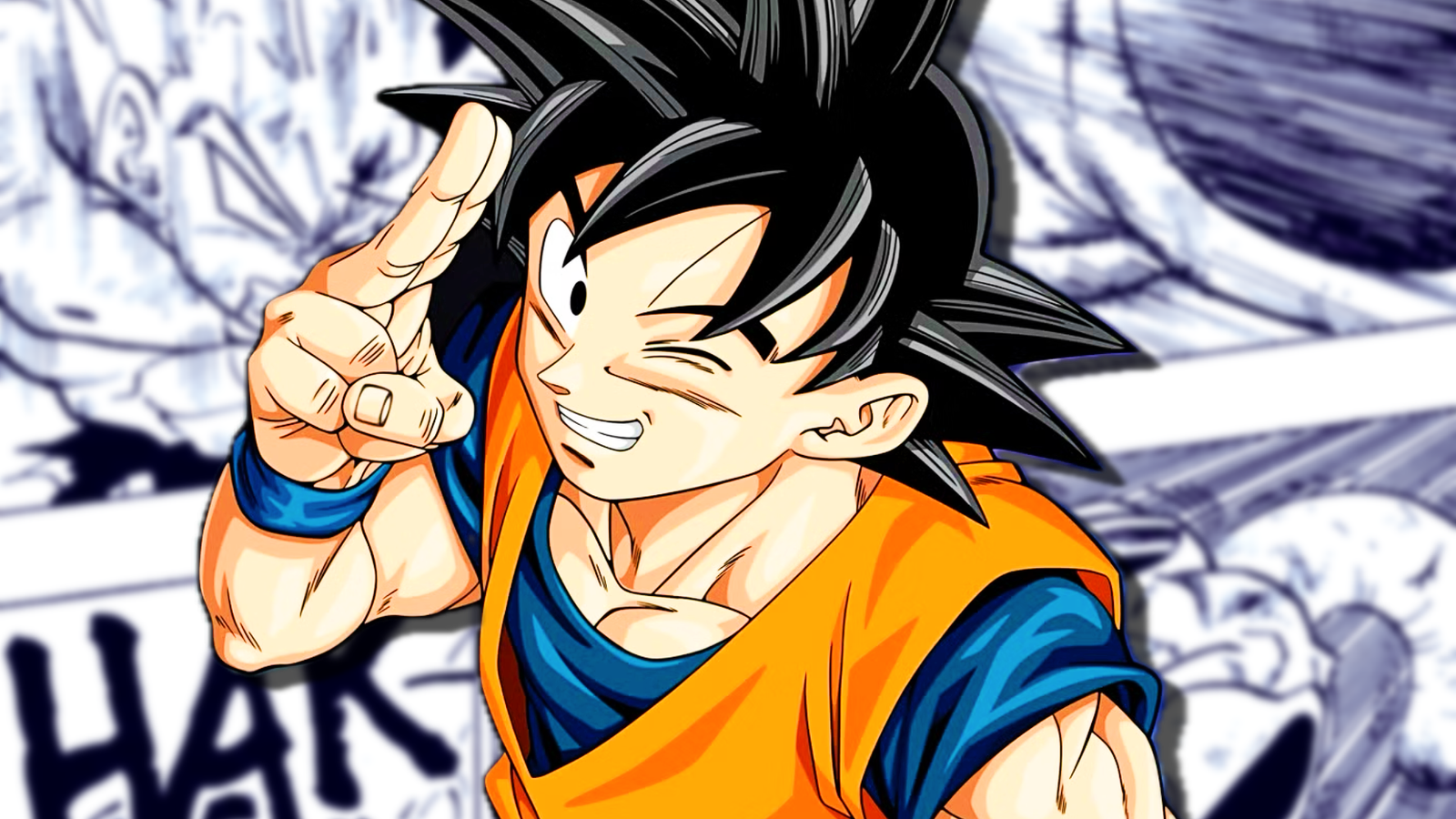
Dragon Ball’s influence on modern anime, particularly the Shonen demographic, is one of the medium’s most defining creative currents. Incidentally, this widespread success and consistent blueprint for high-stakes action and profound character journeys can be traced back to one singular figure, the spiky-haired Super Saiyan, Son Goku.
Before Goku burst onto the scene in Dragon Ball, anime’s structure of long-form action narratives lacked the enthusiastic focus on power escalation, intense training, and unshakeable hope that is now considered standard. His enduring legacy established the fundamental rules for what a powerful yet relatable protagonist must be, and these heroes follow this blueprint.
10
Asta – Black Clover

In the world of Black Clover, where magic is everything, Asta is an orphan with not an ounce of magic in him. Defined by his loud enthusiasm and incredible physical/mental fortitude, Asta’s refusal to quit allows him to wield the power of Anti-Magic after receiving a five-leaf clover Grimoire. Like any other hero, Asta has a goal.
His goal is to become the Wizard King, the top mage in the Clover Kingdom, which he pursues through relentless, shouted conviction and ceaseless, agonizing training. Simply put, Asta is the spiritual successor to the original, pure Shonen protagonist. His single-minded ambition, constant shouting, and reliance on physical training over natural talent are direct echoes of Goku’s early personality.
Not to mention, the concept of gaining a rare, transcendent power, in this case, Anti-Magic, that counters the world’s fundamental force, is essentially a modernized twist on the Super Saiyan transformation. In all, though the similar points between both characters may not be exact, it is clear that Asta rides a varied wave of Goku’s influence.
9
Izuku ‘Deku’ Midoriya – My Hero Academia

In My Hero Academia, Izuku ‘Crybaby’ Midoriya begins as a quirkless teenager, born without any of the superpowers that define his society. Regardless of his obvious disadvantage, however, his relentless desire to save others earns him the mantle as All Might’s successor and the power of One For All.
His story details a journey built on self-discipline, mentorship, and a profound desire to save others, even at personal cost. Peculiarly, the parallels between Deku and Goku are evident in the former’s earnest attitude and instinctive compassion. Through sincerity, both heroes encourage their allies, drawing others together with their unyielding moral clarity.
Deku’s habit of analysing opponents resembles a refined evolution of Goku’s battle intuition, while One For All mirrors the generational inheritance of power found in Dragon Ball’s Saiyan progression. Their commitment to protecting others above personal ambition cements Deku as a modern continuation of the ideals Goku brought to mainstream anime storytelling.
8
Denji – Chainsaw Man

The titular protagonist of the Chainsaw Man series, Denji, debuts as a broke, destitute young man who works as a Devil Hunter for the Yakuza to pay off his late father’s massive debt. When he is betrayed and left to die, his partnership with the Chainsaw Devil, Pochita, fuses the pair into the chaotic and brutally effective Chainsaw Man.
Surprisingly, Denji’s motivations are remarkably simple and grounded: achieving a comfortable life, eating good food, and finding physical intimacy, representing an honest, if slightly crass, aspiration. As a result, though Denji’s world is darker, his roots align with Goku’s simple-minded sincerity and emotional transparency.
Both characters approach their lives with directness and an unwavering focus on basic needs, offering a refreshing purity among more complex casts. Consequently, while their worlds differ greatly, Denji’s authenticity and growth patterns owe clear structural debt to Goku’s foundational archetype.
7
Yuji Itadori – Jujutsu Kaisen

Jujutsu Kaisen introduces its central character, Yuji Itadori, as a high school student with unnatural athletic prowess whose life drastically changes when he consumes a cursed object. Through that, he becomes the vessel for Ryomen Sukuna, the most powerful cursed spirit, entering the shadowy world of Jujutsu Sorcery.
Like the typical Shonen hero, Yuji is characterized by his innate kindness, strong moral code, and willingness to sacrifice his own body to save others. Unsurprisingly, Yuji’s heroic identity derives significant influence from Goku’s template. Both heroes exhibit instinctive kindness and natural athleticism, complemented by a strong desire to protect others.
Moreover, Yuji’s abrupt leap into extreme powers of jujutsu parallels Goku’s early revelations of his hidden potential. Also, Yuji’s hand-to-hand combat style evokes Dragon Ball’s emphasis on physical skill. Even Jujutsu Kaisen’s battle rhythm, from fluid movement to escalating forms, all draw from patterns Dragon Ball first established. In short, Yuji functions as a modern, emotionally richer version of Goku’s foundational ideals.
6
Tanjiro Kamado – Demon Slayer

Tanjiro Kamado’s life is shattered when a demon slaughters his family, leaving his sister Nezuko as a demon. Motivated by an enduring sense of hope and vengeance, Tanjiro trains rigorously to join the Demon Slayer Corps, mastering the Water Breathing Style.
Outside of his deep hatred for Muzan, Tanjiro’s greatest traits are his enhanced sense of smell and his profound empathy for all, including his enemies. Comparatively, while Tanjiro’s personality is gentler than Goku’s, his story still draws from Dragon Ball’s structural blueprint.
His proficiency with Sun Breathing, regarded as a near-mythical, hidden power unlocked under duress, is akin to Goku’s discovery of the Super Saiyan form during the Namek conflict. Finally, Tanjiro’s unwavering devotion to training, his incremental gain of power, and his mastery of powerful breathing techniques all adhere to the fighting fantasy template established by Goku and the entire Z-Fighter legacy.
5
Shinra Kusakabe – Fire Force

The protagonist of the Fire Force series, Shinra Kusakabe, is a fourth-generation pyrokinetic better known as the “Devil’s Footprints” for his ability to ignite and control flames from his feet. On the back of his heroic ambitions, he joins the Special Fire Force Company 8 to clear his name after being falsely accused of starting the fire that killed his family.
Shinra’s energetic optimism and unwavering belief in improving the world follow the emotional model Goku helped standardise. Furthermore, his core motivation, which is to be a smiling hero, a concept constantly referenced in the narrative, directly mirrors Goku’s pure-hearted approach to fighting evil.
To crown it off, the anime’s use of visually spectacular, escalating fire techniques also utilizes the Dragon Ball template, where a dramatic, beautiful spectacle accompanies every new level of mastery. Thus, between the pair’s straightforward motivations and power accumulations, the Dragon Ball imprint is unmissable.
4
Rimuru Tempest – That Time I Got Reincarnated As A Slime
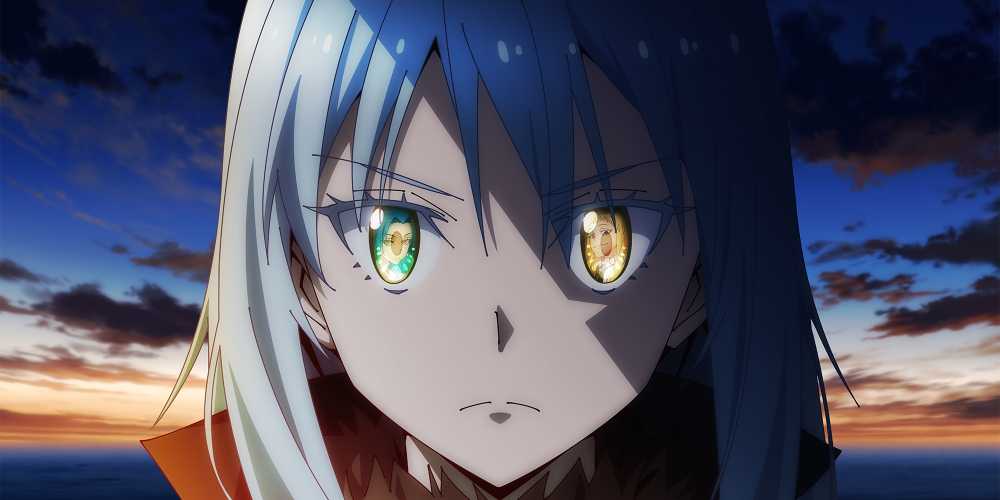
Rimuru Tempest was once a 37-year-old human salaryman named Satoru Mikami, who died and found himself reborn in a fantasy world as a seemingly weak slime monster. Through his unique absorption and analysis skills, Rimuru rapidly accumulates abilities and power, eventually becoming a benevolent, overpowered ruler in his new world.
Familiarly, Rimuru owes core elements of his characterization to Goku’s legacy. His natural ability to attract allies matches the effortless bond-building Goku mastered, using sincerity rather than dominance.
His immense power leaps, which occur with little strain, also follow the iconic escalation patterns introduced by Dragon Ball to mainstream action fantasy. Accordingly, based on characterization alone, Rimuru’s good-natured leadership, cheerful adaptability, and steady moral center all reflect Goku’s influence on the genre’s depiction of benevolent strength.
3
Saitama – One Punch Man

One Punch Man’s Caped Baldy, Saitama, is a hero for fun who can defeat any opponent with a single punch. The result of three years of intense, bizarre training. Having achieved immeasurable power, he suffers from profound boredom and existential apathy, seeking a worthy opponent.
This drives him to approach his duties with a deadpan, often oblivious demeanor, making him the unconventional yet supremely powerful protagonist he is. Unlike others, Saitama is a deconstruction and hyperbolic critique of Goku’s character archetype. His entire premise satirizes the core concept of Dragon Ball, which is the constant escalation of power.
Saitama has already achieved the ultimate power level, effectively making him Super Saiyan God before the series even starts. To put it more accurately, Saitama exists as a philosophical response to the power ceiling that Goku defined.
2
Monkey D. Luffy – One Piece

Son of Monkey D. Dragon, Luffy is the perpetually cheerful captain of One Piece’s Straw Hat Pirates, consumed by a solitary dream: to find the legendary One Piece treasure and become the new Pirate King. His childish curiosity, boundless appetite, and head-on approach to danger define his presence within One Piece, giving him a distinctive charm that balances absurd humour with sincere conviction.
On closer examination, Luffy’s connection to Dragon Ball’s Goku is unmistakable. For one, both approach challenges with cheerful confidence, preferring to push forward instinctively rather than relying on strategy. Additionally, their personalities share a common core built on kindness, loyalty, and an unwavering drive to improve.
However, most notably, the Gear transformations, which involve unlocking new physical states of enhanced speed and strength, are a clear structural homage to Goku’s escalating Super Saiyan forms, which frame growth as sudden, visually distinct thresholds of power. On these fronts alone, you could attribute One Piece’s success to the golden spiky-haired and you would not be wrong.
1
Naruto Uzumaki – Naruto

Proclaimed the ‘Child of Prophecy, Naruto begins his journey as an orphaned outcast in the Hidden Leaf Village, carrying the burden of the Nine-Tailed Fox within him. Defined by his relentless optimism and unyielding spirit, his singular goal is to become the Hokage, the village’s highest protector.
A goal he finally achieves after many years of untold hardship, eventually earning the acceptance of the whole of the Hidden Leaf. The connection between Naruto and Goku is perhaps the most obvious structural debt in Shonen history. Cut from the same cloth, Naruto embodies the “idiot hero” archetype popularized by Goku: simple, food-obsessed, and motivated by pure ambition.
Marked by dramatic power-ups like the Sage Mode and Tailed Beast forms, his journey is similar to Goku’s progression through Super Saiyan levels. Crucially, the Naruto world-building relies on the concept of latent, suppressed power that is unlocked through intense training and emotional resonance, a narrative framework directly inherited from Dragon Ball’s exploration of Saiyan potential.

- Release Date
-
2002 – 2007-00-00
- Showrunner
-
Masashi Kishimoto
- Directors
-
Hayato Date
- Writers
-
Masashi Kishimoto