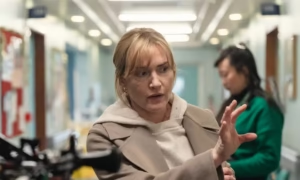
While many know Lily Gladstone as the beloved actress who became the first Native American nominated for the Academy Award for Best Actress, there is so much more to her. Within moments of meeting her, ou instantly know that Gladstone is as knowledgeable as they come, hungry to teach everyone what is going on with her tribe and the almighty buffalo. The Oscar-nominated actress is using both her voice, literally and metaphorically, and her platform to bring all eyes onto the documentary that took years to create: Bring Them Home.
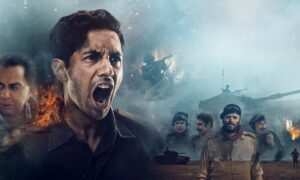
Directed by Daniel Glick, Ivan MacDonald, and Ivy MacDonald, the doc tells the story of the Blackfoot people working to restore the wild buffalo to tribal land after a century of absence.

Related story
Rosamund Pike Reveals What ‘Intrigued’ Her About Her Villainous Character in Now You See Me: Now You Don’t (Exclusive)
Gladstone both executive-produced and narrated the powerful doc, and it all came to be because of Glick. “Daniel Glick, one of the three directors, approached me eight years ago, so I’ve been attached for a long time,” she said. “He was doing his due diligence as a good documentarian and just as a good human. He was gonna be making a film about Blackfeet Buffalo revitalization, and he was gonna work with Blackfeet people. So when he was asking around the nation and working around the Montana Film Office to get things going, everybody kept bringing my name up when he was asking for collaborators.”
The long-awaited documentary impacted viewers to look at the world as a whole, including some of our SheKnows staff. Gladstone added, “The documentary has been growing alongside an evolving narrative that everybody who’s created the doc now is working on so we can get a little bit more into some thematic, nitty-gritty, characterized, traumatized elements of this whole process of revitalization.”
Now, from the outside looking in, you may wonder: Why are buffalo so beloved? So powerful? Why are they so needed? While Gladstone touches on it all throughout, we can answer a drop of what’s behind the power of the buffalo. Buffalo are a sacred symbol of life and resilience. They are leaders, teachers, and a part of the family. Buffalo teach so much, and in the documentary, you can truly begin to grasp how highly they’re regarded.
In an exclusive chat with SheKnows, Gladstone talked about everything from the documentary. Both down-to-earth and brilliant, Gladstone dropped nothing but the truth when discussing community, resilience, and how young children can learn from the buffalo.
See what she said below:

Michadel Donnelly
On Historical Trauma
In recent years, the concept of trauma and how we face it has been a major talking point. Mainstream media has mostly focused on mental and physical trauma, but Gladstone wants people to take a look at a type of trauma many Native Americans know about firsthand: Historical trauma. “It’s inherited, and if it’s not understood, if it’s not confronted and faced head on, and dismantled by the community, it’s going to repeat itself,” she said.
“Historical trauma comes in a lot of different forms, and has not just human victims, as the documentary kind of entails,” she added. “This process of walking back centuries-old, sort of continual stream of concerted government efforts to eradicate who the American Indian people are. The documentary highlights that for us, as Blackfeet people and a lot of High Plains tribes, whose lives, sense of self, grand purpose, and a bigger timeline than any of us can really fathom, are connected to buffalo, to the American bison.”
It all links back to the buffalo and to the community, as you’ll quickly learn. The Killers of the Flower Moon star added, “In healing this historic trauma that we’ve inherited, but we can choose to not perpetuate, we’re course correcting in a way that, as a community, pushes us forward. Where I was raised, lots of kids hear this growing up: It’s like the buffalo.”

Michadel Donnelly
On Community
Community can mean so many things, and while the ideal of a community may be dwindling to many, people like Gladstone are ensuring it never fades. Simply put, “Community is survival. It’s physical survival, it’s spiritual survival, it’s individual.”
As the documentary dives in on, the US used the divide and conquer method with so many tribes; something many members feel to this day. However, Gladstone remarked that there’s a solution: “Division is about dividing people. It’s about dividing the community. So the antidote to that is sticking together.”
One mindset she sticks to came from her great, great, great-grandfather, Mí’kai’stoowa, Red Crow, from the Kainai, saying, “He talked about how Blackfoot people were buffalo people. He was alive and witnessed that transition of buffalo to cattle, which is kind of the lifeblood and what became, for where I grew up, almost more of a cultural identity than being Blackfeet was for a lot of folks, being cattle ranchers. Because that was something that was available to us to make money, leasing out these allotments that we were given to cattle ranching and then becoming cattle ranchers ourselves.”
While “working with cattle, kind of became synonymous with Blackfeet culture.” Gladstone wanted people to know what her legendary ancestor said: “What Red Crow used to say was, ‘That’s how our people are gonna be. We’re buffalo people, and we’re being made to be cattle people.’”
She recounted. “Because cattle, if they don’t have a rancher herding them into a warm place in the winter, will freeze to death. If they’re not being fed by the rancher on a certain timeline, then they’ll go then they’ll starve to death. They are dependent creatures, and they’re not suited for the landscape that they were introduced in. So in revitalizing this connection that we have with buffalo, it heals us, and it heals the earth.”
Along with being in a landscape not made for them, “they eat grass before it has a chance to pollinate [and] they stamp the earth down and make it kind of untenable.”
But buffalo? “Buffalo, as they move, one thing we were raised with, anytime that you face hardship, be like the buffalo,” she said. “Buffalo give birth in the middle of winter. They survive subzero climates because when a storm is coming, as a community, all of them, they turn into it and face it head-on, and they keep moving. To stop moving would be to basically accept defeat.”
She added, “This documentary helps us remind ourselves that we’ve always been buffalo people, turning into, facing the storm, and continuing to push through it. It’s what’s gotten us through centuries of colonization at this point. It’s what’s gotten us through not having the buffalo around for as long as we have. It’s really exciting to see the land heal, and the people heal, and the buffalo all heal together.”

Michadel Donnelly
On How Humans Can Learn from the Buffalo
Many people from the Blackfeet tribe learn so much from the buffalo and from where humans stand in the grand scheme of things. To put it bluntly, Gladstone said, “Human beings are fairly pitiful.”
“We have a small timeline. We have a short time on this earth. We’re born vulnerable. We have to learn how to be. And as a species, as people, as a culture, Blackfeet have learned who we are by watching the buffalo, by watching the animals and the non-human peoples that we share a world with,” she said. “So it just goes hand in hand in undoing and untangling that historic trauma that it has to happen for them, too.”
Gladstone also made a point of noting how that mindset is so different from Western society, noting that many see humans in a hierarchy, but it’s really an “interconnected circle.” She said, “I think one thing that we all kind of have in common and that can resonate with everybody who watches the doc is recognizing that we’re part of something way bigger than ourselves. We’re human beings, but we’re all animals that exist within an ecosystem, and we have a very sacred role to play in that.”
“Healing is kind of reconciling, restoring, and returning in a cyclical form to our origin. Part of it is what makes us pitiful, but it’s what makes us strong. It’s that interconnectedness that we have together,” she added. “It’s our job to keep things in balance. It’s undoing historical trauma as a way of restoring balance.”

Michadel Donnelly
On What She Has to Say to the Next Generations
Throughout our chat, Gladstone often noted her family and her tribe as a whole as sources of ancestral wisdom. When asked for advice for the Blackfeet tribe’s youth, she immediately recalled what she was told: “Be like the buffalo.”
“You turn into the storm, and you face it head on, but you’re not doing it alone,” she said. “It’s one thing that’s significant about this, this calving during the middle of winter, just remembering that these baby buffalo are touching ground for the first time in snow, and they survive because they have a community around them.”
She added, “There’s this sacred place that our youth hold with us because they’re the ones who are inheriting the world after us. They’re also the ones who are assuring our continuation as a people. So they’re part of a much bigger story than the timeline that you’re necessarily told.”
Along with gaining a better perspective on life, Gladstone never fails to use an opportunity as a teaching moment. In fact, we ended up discussing Maslow’s Hierarchy of Needs, which is a psychological theory that proposes humans are motivated by five levels of needs. She noted that “Maslow himself spent time with Blackfoot people in Canada, and later in his life, he kind of synthesized his teachings from Blackfoot.”
“In this pyramid of having your basic needs met, then having your community needs met. Eventually, you get to the point where the pinnacle of that hierarchy in that period, which Maslow never created, was a business professor who commodified his idea into an economic sort of setting. It places self-actualization and individual sort of glorification at the top of the pyramid,” she remarked, noting that many Blackfeet scholars challenged the rest of the pyramid. Scholars asked, “Why would your basic needs being met even be a question? Of course you’re gonna be fed, of course you’re gonna be housed, of course you’re gonna be loved. So that’s just day one. You have a place, you’re valuable!”
And she had one more message for the next generation: “To all these youth, you’re so needed, and you’re so loved by your community. You play a bigger role in continuing who we are as people.”