What is Tim Pawlenty’s net worth?
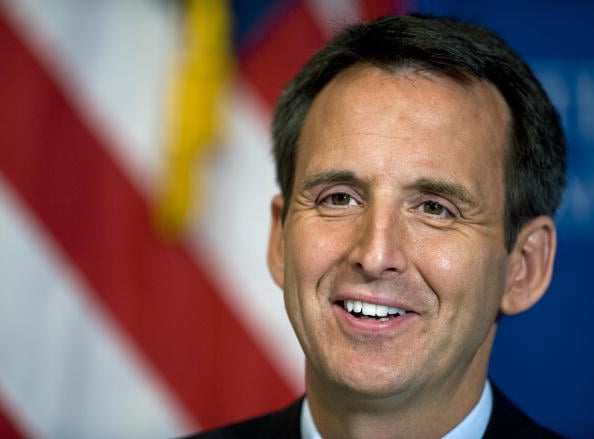
Tim Pawlenty is an American politician, attorney, and public policy executive who has a net worth of $4 million. Tim Pawlenty is best known for serving two terms as governor of Minnesota and for his later roles within the national Republican Party and Washington policy circles. Rising from humble beginnings, Pawlenty built a reputation as a disciplined fiscal conservative, emphasizing tax restraint, government reform, and pragmatic governance in a traditionally Democratic-leaning state. His eight-year tenure as governor coincided with periods of economic stress, budget shortfalls, and shifting political coalitions, forcing him to balance ideological commitments with the realities of divided government.
After leaving office, Pawlenty transitioned onto the national stage, briefly emerging as a potential Republican presidential contender and later taking on influential roles within conservative advocacy organizations and the financial services industry. Though he never became a dominant national political figure, Pawlenty has maintained steady relevance as a policy-oriented Republican with deep experience in state governance, party leadership, and regulatory affairs. His career reflects a blend of Midwestern pragmatism and ideological consistency, appealing to party insiders even when broader voter enthusiasm proved elusive.
Early Life and Education
Timothy James Pawlenty was born on November 27, 1960, and grew up in South St. Paul, Minnesota. He was raised in a working-class household, the son of a truck driver and a homemaker. Pawlenty has frequently pointed to his upbringing as formative, emphasizing personal responsibility, faith, and hard work as core influences.
He attended the University of Minnesota, where he earned a bachelor’s degree in political science. Pawlenty later obtained his law degree from the University of Minnesota Law School, supporting himself in part through part-time work. After law school, he began practicing law and became active in Republican Party politics at the local level.
Minnesota House of Representatives
Pawlenty was elected to the Minnesota House of Representatives in 1992, representing a suburban district south of St. Paul. He served five terms in the House, steadily rising within the Republican caucus. In 1999, he was elected House Majority Leader, a role that positioned him as one of the most influential Republicans in state government.
During his legislative career, Pawlenty focused on fiscal policy, crime prevention, and education reform. His time in the House helped establish his image as a policy-focused conservative capable of negotiating within a divided legislature, a skill that would become central to his later governorship.
Governor of Minnesota
In 2002, Pawlenty ran for governor of Minnesota and won a three-way race, benefiting from a split between the Democratic-Farmer-Labor Party and the Independence Party, the latter of which had been elevated to prominence four years earlier by the election of Jesse Ventura. Pawlenty succeeded Ventura, who had chosen not to seek a second term, and took office in January 2003. He was reelected in 2006, serving as governor until 2011.
As governor, Pawlenty emphasized tax restraint and positioned himself as a consistent opponent of broad-based tax increases. Instead, he relied on spending controls, budget restructuring, and, at times, accounting shifts to close persistent fiscal gaps. His tenure was marked by repeated budget standoffs with a Democratic-controlled legislature, leading to several high-profile confrontations over state spending priorities and government shutdown threats.
Pawlenty also pursued conservative policy goals on social issues, vetoed proposed tax increases, and signed legislation related to education standards and transportation funding. Much of his governorship coincided with the Great Recession, which intensified fiscal pressures on the state and tested his governing philosophy. Despite operating in a politically divided environment, Pawlenty managed to serve two full terms, restoring Minnesota to a more traditional two-party dynamic after Ventura’s unconventional administration.
National Republican Profile
During his second term as governor, Pawlenty became increasingly visible on the national stage. He served as chair of the National Governors Association and was frequently mentioned as a potential vice-presidential or presidential candidate. In 2011, he formally entered the Republican presidential race, campaigning on executive experience and fiscal conservatism.
Despite early expectations, his presidential bid struggled to gain traction, and he withdrew from the race before the first primary contests. The campaign nonetheless raised his profile within party leadership and conservative policy circles.
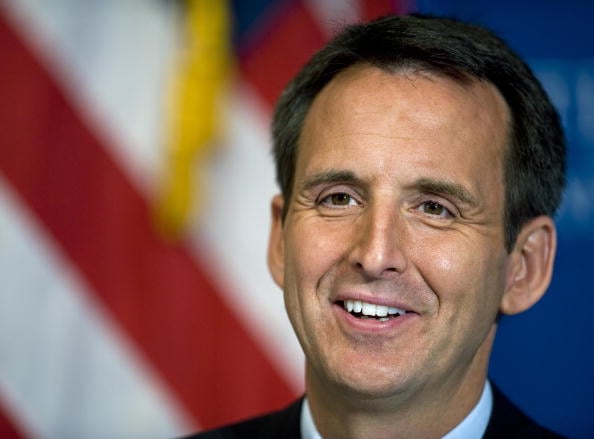
(Photo credit should read PAUL J. RICHARDS/AFP/Getty Images)
Washington and Private-Sector Roles
After exiting electoral politics, Pawlenty moved into policy advocacy and finance. He became president and CEO of the Financial Services Roundtable, later renamed the Bank Policy Institute, representing the interests of large U.S. banks and financial institutions. In that role, he served as a key intermediary between the financial industry and federal regulators, particularly during debates over post-crisis banking rules.
Pawlenty also remained active in Republican politics, advising candidates and serving in party leadership roles. He was appointed chair of the Republican National Committee’s Financial Services Advisory Council and continued to appear regularly as a political commentator.
2018 Gubernatorial Campaign
In 2018, Pawlenty returned to Minnesota politics, seeking a third term as governor. The campaign, however, failed to gain momentum in a changed political environment, and he lost the Republican primary. The defeat underscored how much both the state and the party had evolved since his earlier victories.
Personal Life and Public Image
Pawlenty is married and has two daughters. He is a practicing Catholic and has often cited faith as an important influence on his worldview. Known for a low-key personal style and policy-driven rhetoric, Pawlenty has generally avoided the populist theatrics that came to define later phases of Republican politics.
Career Legacy
Tim Pawlenty’s career is defined by durability rather than flash. As governor, he demonstrated how a disciplined conservative could govern a politically divided state for nearly a decade. Though his national ambitions ultimately fell short, his influence persisted through policy leadership, party service, and private-sector advocacy. Pawlenty remains a case study in Midwestern Republican governance, blending ideological consistency with administrative experience in an era of increasing political polarization.
All net worths are calculated using data drawn from public sources. When provided, we also incorporate private tips and feedback received from the celebrities or their representatives. While we work diligently to ensure that our numbers are as accurate as possible, unless otherwise indicated they are only estimates. We welcome all corrections and feedback using the button below.