The horror genre is not easy to get right. Sure, you have films that leave you feeling scared out of your mind, but most of them end up being duds that rely on cheap special effects and predictable tropes that get a few screams out of the audience.
Great horror, however, has rarely been about the gore or the monsters. True fear is instilled when filmmakers immerse their viewers in worlds that might feel like ours before pulling the rug from right under us. As a horror fan, here are 10 movies that mastered the art and set the benchmark for what the genre should actually feel and look like, to me.
10
‘Orphan’ (2009)

A lot of horror films tend to rely on shock value and jump scares to create that feeling of constant fear, but Orphan doesn’t need any of that because this film is a masterclass in storytelling. The psychological horror follows Kate (Vera Farmiga) and John (Peter Sarsgaard), a couple who are trying to move past the stillbirth of their daughter. The two decide to adopt a 9-year-old Russian orphan named Esther (Isabelle Fuhrman) to fill the void. However, they soon realize that she might not be the perfect addition to their family, or at least, Kate does.
Orphan is far more twisted than one might expect because of how director Jaume Collet-Serra immerses us in the story, before pulling off the plot twist of a lifetime. You almost question Kate’s sanity when she starts suspecting that something is wrong with Esther, but when the ball finally drops, everything comes together perfectly. The twist in Oprhan redefines the entire story, and Furhman’s spine-chilling acting takes the dread to a whole new level. The film has now become a modern cult classic because of how disturbing and unsettling it feels right off the bat. If you’re looking for haunted houses or evil spirits, Orphan might not be the film for you. However, it shows that sometimes, the true horror lies within humans.
9
‘The Thing’ (1982)

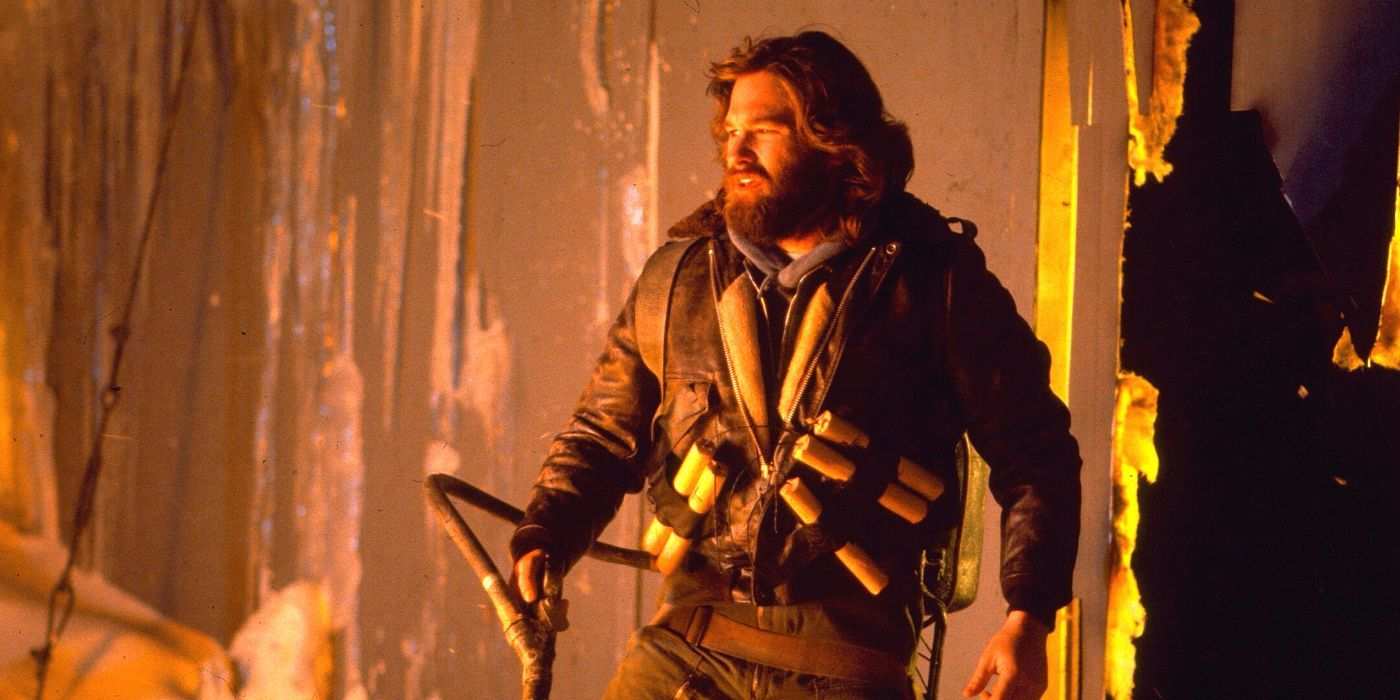
The Thing is John Carpenter’s greatest sci-fi horror masterpiece, and it still holds up to this day. The film is over four decades old, but it remains a skin-crawling experience that stays with you long after the credits roll. The film revolves around a group of American researchers who encounter an alien capable of perfectly mimicking any living being. The uncertainty Carpenter manages to create, where you never know whose shape the alien has taken, is where the film’s horror comes from.
All you can do is watch while the paranoia slowly takes over the entire group. Kurt Russell as R.J. MacReady is the star of the show, and you can almost feel his quiet desperation in every frame. The practical effects in the film were groundbreaking for its time, and the fact that they still feel just as horrific today is a testament to the brilliance of The Thing. The best part, though, is the film’s ambiguous ending, with the audience left wondering if the alien has taken the shape of MacReady or Childs (Keith David). The Thing is an exploration of isolation that can slowly eat away at our humanity. This is a film that only gets better with every rewatch.
8
‘Get Out’ (2017)

No one mixes horror and social commentary like Jordan Peele, and Get Out is the perfect example of that. There’s no denying that the film has completely redefined the genre for the modern age and dared its viewers to confront their underlying prejudice. The story follows Chris (Daniel Kaluuya), a Black photographer who visits his white girlfriend, Rose’s (Allison Williams) family, but can’t shake off the feeling that something is horrifically wrong at their sprawling estate. The horror in Get Out feels almost too real because of how Peele takes the idea of everyday racist microaggressions and turns them up several notches.
The story captures the fetishization of Black bodies through a story of appropriation, erasure, and survival, to a point where you just can’t look away from it. At the same time, the film is filled with sudden bursts of Peele’s signature humor, but the absurdity of it all only makes the story feel more chilling. The film’s climax is the stuff of nightmares because the moment you see the police lights flash, you feel relief, but then the dread slowly settles in, too. Peele delivers one of his best works and captures Chris’s suffocating discomfort of being around people who think they are the good guys. I have no doubt that Get Out will go down in history as one of the smartest horror films to have ever been made.
7
‘Hereditary’ (2018)

Hereditary explores grief and family trauma in a way that almost feels a little too real, but that’s what makes the film so raw. The story follows Annie Graham (Toni Collette), whose immaculately planned life begins to unravel when her estranged mother dies. Gabriel Byrne, Alex Wolff, and Milly Shapiro round out Hereditary’s impressive cast, with all of them contributing to the story’s sense of eeriness in their own ways.
The way the Graham family is rotting from the inside feels inevitable, but chills you to the bone when it does start to happen. The rituals, the cult, and the demon Paimon have a deeper connection to the family’s emotional curse, and that’s why they feel scarier than usual. You almost forget that this is Ari Aster’s debut film because of the way he blends drama annd horror together. Every frame in the film serves a purpose, and the slow, deliberate pacing of the story is a true reflection of how grief can turn into madness.
6
‘A Quiet Place’ (2018)

A Quiet Place stays true to its name and is a film that doesn’t equate horror with blood-curdling screams. Instead, it forces you to find terror in silence. The story is set in a world where even the slightest whisper can summon monstrous creatures who have wiped out most of humanity. We follow the Abbott family, where Lee (John Krasinski) and Evelyn (Emily Blunt) live barefoot, communicate through sign language, and eat off lettuce leaves, just to avoid making a single sound.
Every moment of their life is measured and rehearsed, and the film does a great job of establishing that from the very first scene, when little Beau (Cade Woodward) sets off a toy spaceship. The monsters in the film are terrifying, but the way this kind of life impacts the family is the real horror. The birthing scene and Lee’s ultimate sacrifice in the end are where the story culminates. It’s both heartbreaking and heartwarming, especially when Lee signs “I love you. I’ve always loved you” to his daughter. A Quiet Place is a devastating film that dares to take a risk, and in doing so, it reminds of of what true horror really looks like.
5
‘Scream’ (1996)

Scream has to be one of the smartest, most self-aware horror films out there that parodies the genre but manages to be a spine-chilling slasher at the same time. Scream singlehandedly revived slasher films, with several others trying to cash in on its fame. However, none of them have come close to the original in terms of its tone and impact. The story follows high school student, Sidney Prescott (Neve Campbell), who is dealing with the brutal murder of her mother. However, when a masked killer starts targeting her classmates, Sidney’s small town of Woodsboro descends into absolute chaos.
The film takes every horror trope out there and uses it against the audience in creative ways. From that shocking opening scene with Drew Barrymore to the eventual reveal of Ghostface, Scream feels familiar yet still takes you by surprise. The cast is brilliant, with Campbell being the heart and soul of the franchise, along with Courteney Cox’s Gale Weathers and David Arquette’s Dewey. Scream laughs at horror and sheds light on people’s obsession with the genre. At this point, Ghostface’s famous line, “Do you like scary movies?” is a pop culture moment in itself, and that tells you all you need to know about Wes Craven’s genius with this one.
4
‘The Shining’ (1980)

The Shining is the ultimate slow-burn psychological horror film, but its deliberate nature has helped it stand the test of time. One would expect a film in the genre to immerse the audience in fear right off the bat, but Stanley Kubrick takes his sweet time to set the world and characters of The Shining up. This way, when the horror comes, it feels more personal and unsettling than ever. The Stephen King adaptation stars Jack Nicholson as Jack Torrance, who moves to an isolated Hotel with his family to serve as the winter caretaker. The atmosphere and setting of the film almost serve as characters and bring a lot to the story, perhaps even more than the actual actors at times.
It’s interesting how the director doesn’t blatantly reveal that the hotel is haunted. The audience starts finding its dark history and secrets along with Jack, and even then, things are left so ambiguous that you are in a constant state of tension and doubt. Is the hotel really haunted, or is Jack just losing his mind? The question is never fully answered, and that’s the brilliance of the film. Nicholson delivers an absolutely unhinged performance in the climax, and when you hear him say the iconic dialogue: “Here’s Johnny,” you feel the terror in every bone. The Shining isn’t just a film, it’s an experience that will haunt you for days.
3
‘Child’s Play’ (1988)

Child’s Play is a supernatural slasher that will give you nightmares for weeks because it uses pure, unrestrained terror to drive the story forward. The film singlehandedly ruined dolls for the entire world and introduced one of cinema’s most terrifying and infamous villains: Chucky, the children’s toy with the soul of a serial killer. The story begins with Charles Lee Ray (Brad Dourif), a murderer on the run who transfers his soul into Chucky the doll using voodoo. Now, when young Andy Barclay (Alex Vincent) receives the doll as a birthday gift from his mother, Karen (Catherine Hicks), all hell breaks loose, and people around them start dropping dead like flies.
The most interesting part about the film is how the audience knows that Chucky is alive while the characters have no idea what’s going on. The doll has a twisted kind of charisma, and the fact that he is hiding in plain sight really subverts the idea of a traditional slasher. Child’s Play is also a technical marvel, with Chucky’s face feeling disturbingly real. The film has spawned six sequels, a 2019 reboot, and a television series titled Chucky, but none of them have managed to capture the maniacal energy of the original.
2
‘Rosemary’s Baby’ (1968)

Rosemary’s Baby is a timeless classic that all modern horror films need to learn from. The film is an adaptation of Ira Levin’s 1967 novel and follows Rosemary (Mia Farrow) and Guy (John Cassavetes), who conceive their first baby soon after moving into a new apartment. However, the happy moment is soon turned sour when Rosemary starts suspecting that her husband and their neighbors are part of a cult plotting to take her baby away. The film perfectly reflects the anxiety and stress of a first-time mom-to-be, but doesn’t do it straightforwardly.
There are no monsters or sudden twists to shock the audience because the film relies on building a constant sense of paranoia that will leave you questioning everything. One minute, you think Rosemary is just making all of this up in her head, but the other, you start believing her. The way Rosemary’s Baby takes the experience of pregnancy and turns it into horror is extremely symbolic. Every time someone tells her to calm down or trust the doctor, you feel almost as hopeless and trapped as she is. However, Rosemary’s Baby is brilliant in the way it presents everything as normal until it isn’t, and when Rosemary realizes what has been done to her child, your heart can’t help but ache for her.
1
‘Midsommar’ (2019)

Midsommar is the perfect depiction of what cults look and function like. You either really love the film or you hate it, but there’s no denying the impact it has had on the genre, with horror that really is hidden in plain sight. Midsommar is another Aster masterpiece and features the same slow exploration of the human condition. The direction is flawless, and it’s brilliant how the film feels bright and colorful while something much darker lies beneath the surface. This isn’t the film for anyone who wants jump scares and immediate payoffs because you really have to stick with Dani’s (Florence Pugh) internal journey to see how the unsettling rituals of the Swedish commune gradually pull her in.
In fact, she ends up betraying her own boyfriend just to feel that sense of belonging in this strange world, and that’s when you know she is too far gone. There are points in the film where even the audience is impressed by how peaceful and harmonic the commune feels. Just like Hereditary, Midsommar also explores grief and the things we do to fit in. Pugh does a great job of portraying Dani’s internal conflict, and when she smiles straight into the camera in that final scene, you can practically sense the madness in her eyes. The climax is both horrific and cathartic at the same time, and you’re left wondering if Dani really is happy or if she has just submitted to the cult’s insanity.