What is Brian Orser’s net worth?
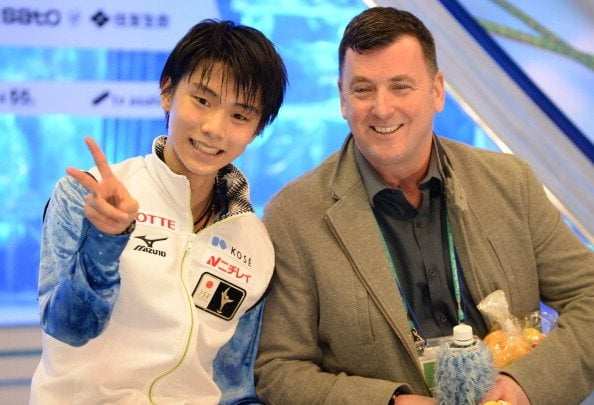
Brian Orser is a Canadian former professional and competitive figure skater who has a net worth of $3 million.
Brian Orser rose to international prominence in the 1980s as one of the sport’s premier men’s singles competitors. A two-time Olympic silver medalist and eight-time Canadian national champion, Orser became known for his technical consistency, strong jumping ability, and competitive rivalry with American skater Brian Boitano during what became known as the “Battle of the Brians.” Though he narrowly missed Olympic gold, Orser’s performances helped define an era of men’s figure skating and elevated the sport’s popularity in North America.
After retiring from competition, Orser transitioned into one of the most successful and respected coaches in modern figure skating. Based in Toronto, he has guided multiple Olympic champions and world medalists, including Kim Yuna and Yuzuru Hanyu. His second act as a coach has, in many ways, rivaled his own competitive accomplishments. Today, Orser is regarded not only as one of Canada’s greatest skaters but also as one of the most influential coaches in the sport’s history.
Early Life
Brian Ernest Orser was born on December 18, 1961, in Belleville, Ontario, Canada. He began skating at a young age and quickly displayed natural athleticism and a strong aptitude for jumps. By his teenage years, he was competing nationally and emerging as one of Canada’s top young prospects.
Orser’s rise through the junior ranks was steady. His technical foundation, particularly his consistency on triple jumps, set him apart in an era when men’s skating was rapidly evolving in difficulty. By the late 1970s, he had transitioned into senior competition and began establishing himself on the international stage.
Rise to International Stardom
Orser dominated Canadian figure skating throughout the 1980s, winning eight consecutive national titles from 1981 through 1988. Internationally, he became a consistent medal contender at World Championships and major events.
His breakout Olympic moment came at the 1984 Winter Games in Sarajevo, where he won the silver medal behind American Scott Hamilton. Orser’s technical precision and clean performances earned widespread praise, even as he finished just short of gold.
Four years later, at the 1988 Winter Olympics in Calgary, Orser competed in one of the most memorable figure skating showdowns in history. Facing American rival Brian Boitano on home ice, Orser delivered a strong performance that included a triple Axel, a jump he helped popularize. Boitano narrowly won gold, with Orser again taking silver. The rivalry captivated audiences and became known as the “Battle of the Brians,” symbolizing the peak of men’s skating during that era.
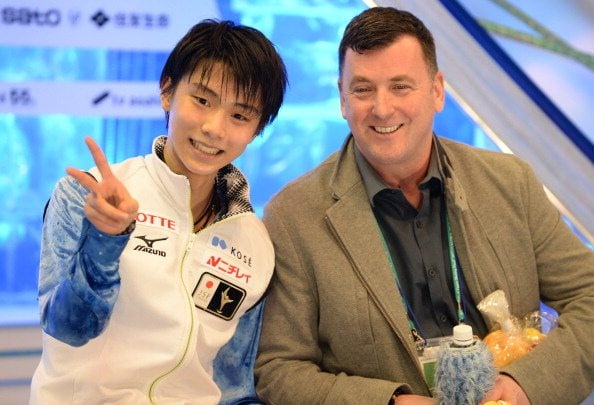
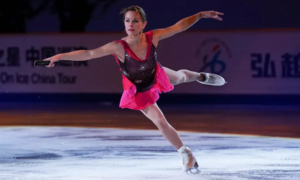
Brian Orser / Atsushi Tomura/Getty Images
Professional Career
After the 1988 Olympics, Orser turned professional and joined touring productions, including “Stars on Ice.” His polished skating style and competitive pedigree made him a fan favorite in exhibition skating. He continued performing in shows and special events throughout the 1990s, maintaining a high profile within the sport.
During this period, Orser also began shifting his focus toward coaching, gradually building a reputation for his technical insight and calm demeanor.
Coaching Career and Olympic Champions
Orser’s coaching career ultimately became even more impactful than his time as a competitor. Based at the Toronto Cricket, Skating and Curling Club, he developed a training environment that attracted elite international talent.
Among his most notable students was South Korean skater Kim Yuna, whom he coached to the gold medal at the 2010 Winter Olympics in Vancouver. Her record-setting performance cemented both her legacy and Orser’s reputation as a world-class coach.
He later coached Japanese star Yuzuru Hanyu, guiding him to Olympic gold medals in 2014 and 2018. Under Orser’s guidance, Hanyu became one of the most accomplished skaters in history, known for his artistry and groundbreaking technical achievements.
Orser has also worked with numerous other top skaters, including Javier Fernández, who became a two-time World Champion and Olympic medalist. Through these athletes, Orser has influenced the evolution of modern men’s skating, particularly in balancing technical difficulty with artistic presentation.
Personal Life
In 1998, Orser publicly came out as gay following a legal dispute with a former agent. At the time, few prominent male figure skaters had spoken openly about their sexuality, and Orser’s decision marked an important moment for visibility in sports. He has since spoken about the pressures of competing in an earlier era and the challenges of maintaining privacy while living in the public eye.
Orser has largely kept his personal life private, focusing on his coaching career and continued involvement in figure skating.
Legacy
Brian Orser’s legacy spans two distinct but equally significant careers. As a competitor, he was one of the most consistent and technically accomplished skaters of the 1980s, winning multiple world medals and two Olympic silver medals during one of the sport’s most competitive eras.
As a coach, he has shaped the careers of multiple Olympic champions and world medalists, leaving an indelible mark on figure skating’s modern evolution. His influence can be seen not only in medal counts but in the refined balance of athleticism and artistry that defines elite skating today.
Through decades of excellence both on and off the ice, Orser has secured his place as one of figure skating’s most respected figures.
All net worths are calculated using data drawn from public sources. When provided, we also incorporate private tips and feedback received from the celebrities or their representatives. While we work diligently to ensure that our numbers are as accurate as possible, unless otherwise indicated they are only estimates. We welcome all corrections and feedback using the button below.