Anime fans sometimes need a strong stomach to get through some grim productions. However, such stories often feature a redemptive silver lining, which makes them worth the discomfort. The medium’s willingness to engage with difficult subjects and show unfiltered human cruelty is what allows anime like Chainsaw Man to garner international acclaim.
Granted, Chainsaw Man is as gory as they come, but even with that, the anime finds ways to keep the story full of emotional depth, a feat that makes the horror feel more personal. While viewers may initially gasp at the anime’s brutality, it’s unsurprising that they eventually start to crave it and seek out others like these ten, which go even darker than Chainsaw Man ever could.
Gantz

With how the anime goes from sci-fi to bloodletting, Gantz isn’t interested in subtlety. Its premise and execution are quite different from Chainsaw Man, but both stories share brutality.
In Gantz, human life is an expendable resource, and sexual violence is the mainstay. The characters, including Kei and Masaru, must carry out missions where slaughtering at the subway is the minimum requirement.
For those who enjoy the dark humor in Chainsaw Man, Gantz will feel like a welcome extension. However, where Chainsaw Man provides emotional leverage to balance the brutality, Gantz may feel like a series of meaningless shocks.
Devilman: Crybaby

Few modern anime are as morally impactful as Devilman: Crybaby. Masaaki Yuasa’s 2018 remake of the classic turns Akira Fudō into a devilman, a half-demon and human, whose empathy isn’t enough to keep him away from chaos. His fight against demons slowly becomes a fight against the hysteria shared by humanity, which may be the real horror all along.
The anime features flexible animation that seamlessly transitions into nightmarish scenes. The story’s violence is shocking, but what elevates it beyond mere shock is how fear compels people to act in monstrous ways. Some viewers appreciate the anime’s rawness, although it’s easy to see why others find it manipulative.
Attack on Titan

Attack on Titan may be the most influential anime of its era. It changed how dark fantasy could be executed, going beyond just strange creatures and adding moral and political sides to the anime.
Hajime Isayama’s story, first animated by Wit Studio, then by MAPPA, starts as an average revenge story before mutating into a global tragedy fueled by hate. With each twist, the story expands the scale while upping the moral ante.
The anime’s brutality is evident in the gore, as well as in the way good intentions are corrupted by fear. Whether in Eren’s radical turn or Reiner’s guilt, the anime remains disturbingly human. While the ending may feel like a letdown, a safer version wouldn’t show how, sometimes, the biggest monsters always live within.
Corpse Party: Tortured Souls

Corpse Party: Tortured Souls as a whole is a bit strange, uneven, yet hard to forget. The anime condenses Team GrisGris’s original into a four-episode nightmare set in the cursed halls of Heavenly Host Elementary.
Students like Satoshi, Ayumi, and Naomi, rather than grow, crumble as victims of the school’s atrocities. The horror isn’t subtle. The anime is full of limbs twisting and death coming in precise ways.
Some fans appreciate the anime’s commitment to cruelty, while others may find it too obsessed with shocking its viewers. Both reactions seem fair. Corpse Party may lack the emotional buildup of Chainsaw Man, but it somehow traps viewers in a hopeless cycle of guilt and punishment that the characters can’t escape.
Berserk

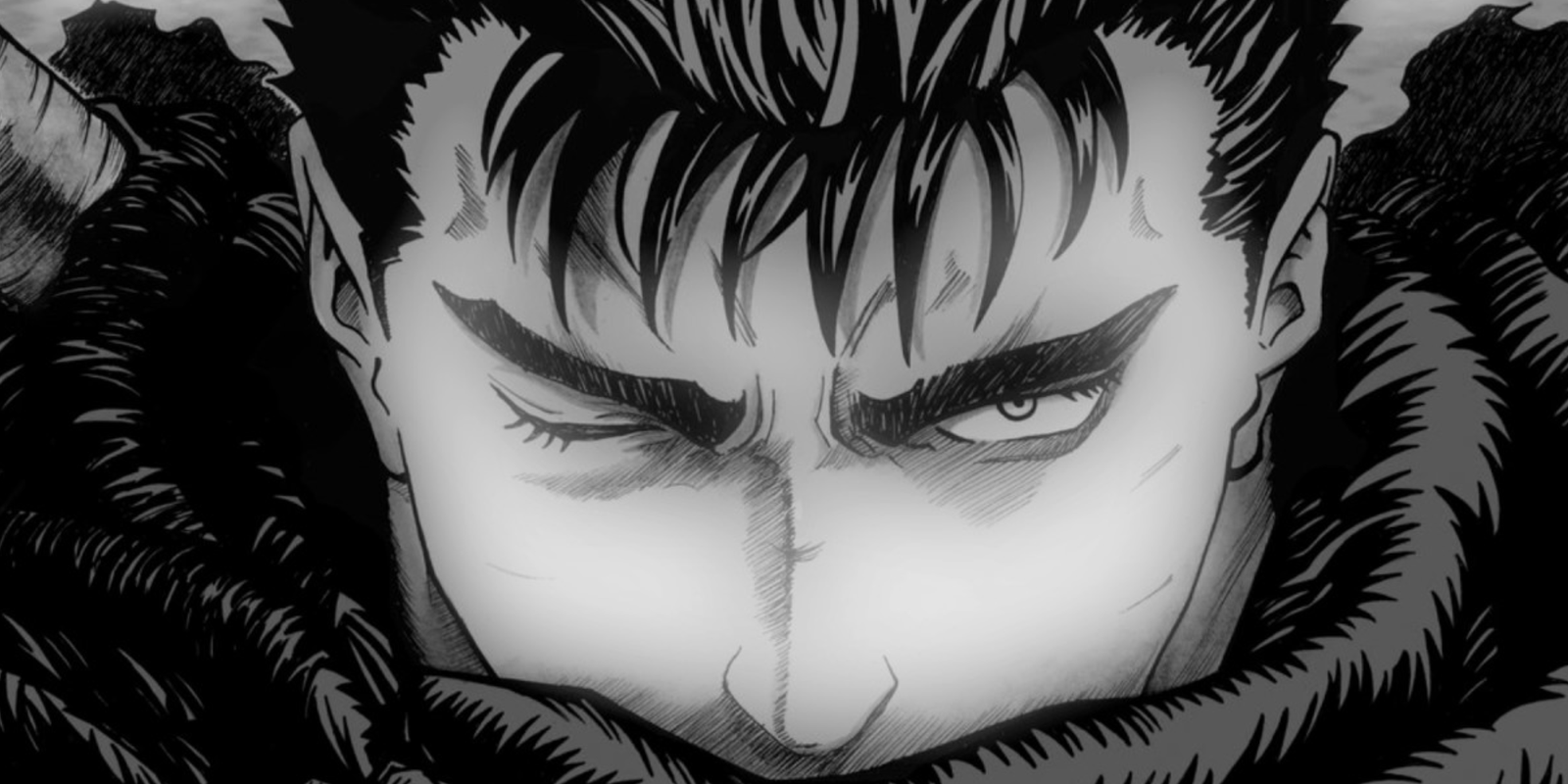
Berserk may be more unrelenting as a dark fantasy anime than Chainsaw Man is. Kentarō Miura’s story follows Guts, a mercenary scarred by both fate and evil people. His path through the Band of the Hawk and Griffith’s betrayal feels more like enduring hardship than building heroism. Every victory cuts deeper than it heals.
The horror in Bersek comes from betrayal and the indifference of gods. The anime is full of suffering, which, despite its significance, doesn’t even compare to how it is depicted in the source material. Berserk is likely too grim and merciless for most people. However, the story is meaningful because of those very traits.
Genocyber

Nearly three decades before Chainsaw Man, Genocyber premiered, bringing with it incomprehensible violence. The ’90s anime mashed psychic twins and military biotech into end-of-the-world chaos that barely made sense, but might be the reason for the anime’s appeal.
Genocyber is cyberpunk filtered through adolescent rage. The plot often takes a backseat, letting the story lean into the carnage of cities crumbling and bodies twisting into machinery. This anime doesn’t try to moralize or justify the violence it portrays. It just wallows in it. While it may seem a bit excessive, it’s an intentional and ugly refusal to clean up reality.
Blood-C

Blood-C might be one of the few anime willing to weaponize discomfort as its core emotion. The anime sets up Saya as a cheerful schoolgirl who moonlights as a monster hunter, only to twist that premise into a performance of ruthlessness. What starts as a cute slice-of-life anime quickly changes into a blood ritual.
Blood-C‘s calm, sunny rhythm makes the violence feel almost mocking, as if the viewer is part of the experiment. The anime is audacious to start, but it can also feel exploitative. Blood-C may stumble tonally, but that just goes to show how its priority is horror and showing who really has control.
Another

Another is one of the cleanest examples of slow-burning dread in modern anime. The 2012 anime by P.A. Works adapts Yukito Ayatsuji’s story and builds horror out of routine occurrences like foggy mornings and empty classrooms.
The arrival of the transfer student, Kōichi Sakakibara, at Yomiyama North seems harmless until strange things start stacking up like a curse no one wants to name. What makes Another disturbing is the restraint as opposed to gory images.
The anime makes simple events like a falling object or a misplaced chair feel fatal. Although figuring out the truth is important, the anime is more concerned with atmosphere than with providing answers. In Another, the fact that everything seems fine is exactly the problem.
Violence Jack

Violence Jack is arguably one of Go Nagai’s most infamous creations. It’s a post-apocalyptic story that still feels abrasive decades later. The story drops Jack into a wasteland ruled by gangs and cannibals, where survival requires mercilessness rather than true heroism.
The violence is grotesque, and it often crosses into abusive territory, yet there’s a strange fascination in how civilization unravels. It feels almost like a satire, sometimes showing chaos for chaos’s sake.
Violence Jack isn’t for viewers seeking comfort. It’s instead a story that shows how depraved humans can be, and how important it is to preserve restraint in such a fragile world.
Parasyte: The Maxim

Parasyte: The Maxim is hardly the first to center on body horror, but the anime turns it into a strangely personal story. Based on Hitoshi Iwaaki’s manga and animated by Madhouse, this anime follows Shinichi Izumi, a teenager whose right hand becomes home to a talking parasite named Migi.
He goes from trying to survive his new reality to taking center stage in a philosophical battle over what it means to be human. Parasyte doesn’t rely on jump scares; instead, it terrifies viewers by showing how Shinichi’s empathy thins as Migi’s logic seeps in.
It’s humanity against cool alien logic. One moment, it’s a normal high school scene, and the next, someone is getting dismembered.

- Release Date
-
2014 – 2015-00-00
- Directors
-
Ken’ichi Shimizu
- Writers
-
Shoji Yonemura, Shinzô Fujita
- Franchise(s)
-
Parasyte