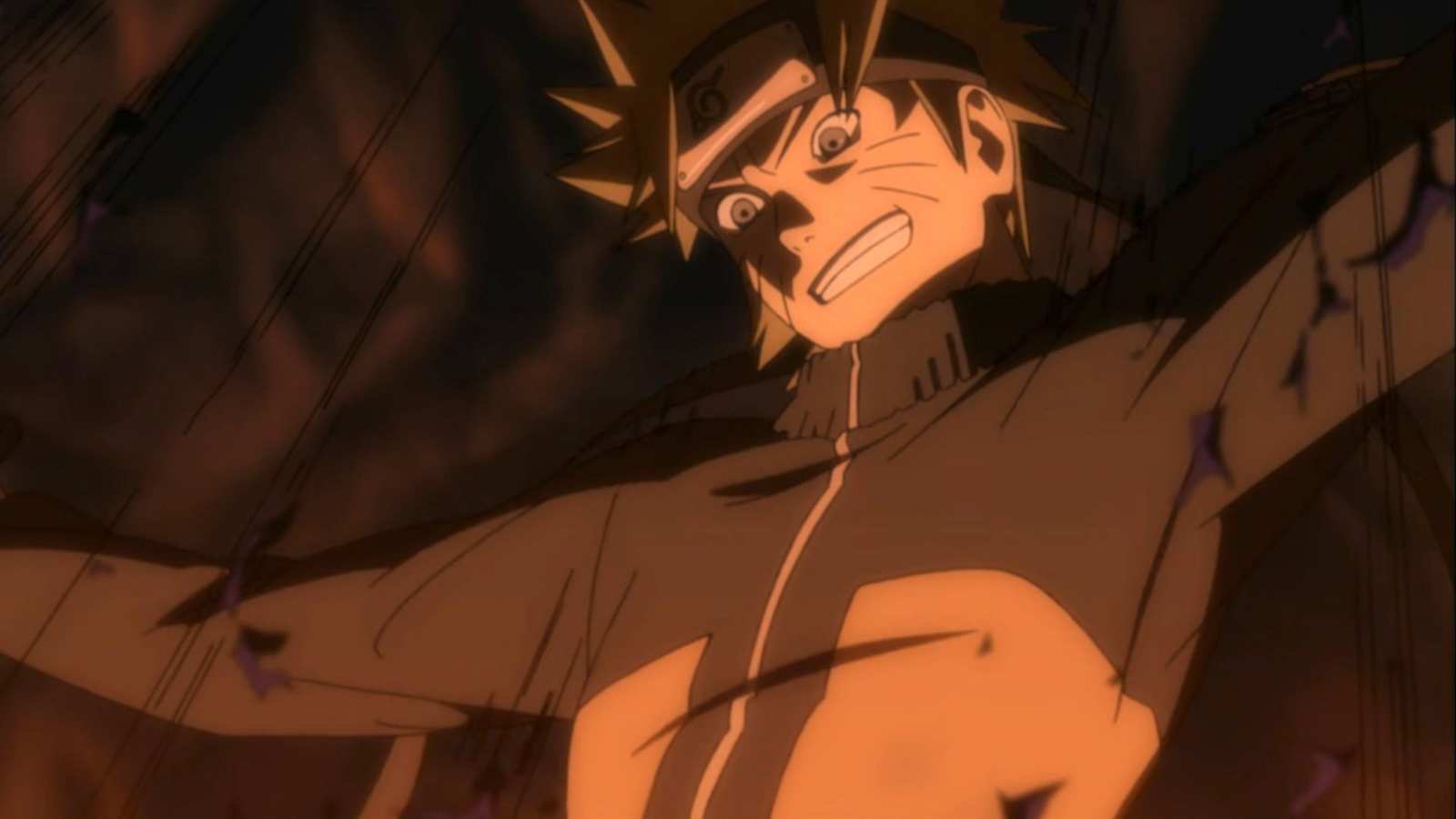
Naruto is a dominant anime and manga franchise, but its extended media presence is something of a mixed bag. While the Ultimate Ninja Storm series of video games is particularly strong anime anime titles, its movie output enjoys a somewhat middling reputation. However, as fans can attest, they’re still worthwhile viewing for entertaining Naruto scenarios.
Naruto movies are products of a different era, having never seen record-setting contemporary box office successes like those of Demon Slayer. Many aren’t canon and are therefore deemed unessential, but their good qualities are still fun to assess. The best Naruto movies don’t have to be canon to be enjoyable, and can even boast brilliant moments among their worst offerings.
11
Naruto the Movie: Legend of the Stone of Gelel

The second Naruto movie lacks the little charming moments from its predecessor, despite incorporating more of its supporting cast. While characters like Gaara appear, they feel underutilized, while Shikamaru’s Shadow Possession jutsu feels conversely more like the tactical asset it is. The movie’s one-off cast, from an unnamed continent, feel especially out-of-place and not in a particularly fun way.
In a plot featuring a duplicitous villain with initially noble pacifist intents, in retrospect, feels like a weak filler-themed precursor to Madara’s Infinite Tsukuyomi plot. Characters like Temujin felt like a vague mixture of Dragon Quest aesthetics and a Great Value Char Aznable design, and the animation, while having glimpses of fluidity and striking vignettes, largely falls flat.
10
Naruto Shippuden the Movie: Blood Prison

Despite an introduction featuring ninjas doing ninja things: a Naruto impersonator attempting to kill Fourth Raikage A, as well as killing three Cloud and two Stone Jonin, the novelty wears off rather quickly. Naruto is framed for these deeds by a Yugakure ninja and sent to Hozuki Castle, where he quickly stands up to its master, Mui.
The movie has some fun points, including Naruto’s Sage Mode getting plenty of exposure in the climax, the grounded imprisonment concept feels short-lived. With Hozuki Castle designed to limit one’s chakra, Naruto should have been reasonably nerfed, but it still staged an explosive final fight with the monstrous Satori threat that would emerge.
Seeing moments like Killer Bee or Gamabunta joining the fray are fun, but others, like the shinobi thrashing unarmed escaped prisoners, and a weaker iteration of Granny Chiyo’s actions in the Kazekage Rescue Mission Arc, felt variations of odd to weakly-executed.
The villain, unlike most Naruto movie villains, turned out to be among the least cruel, with intentions of saving his son. Despite sweet touches like these, other moments feel sloppy, like Naruto awkwardly asking Ryūzetsu if she’s a transvestite, with a similar misgendering instance in a previous Naruto movie. Animation-wise, Blood Prison hardly felt like more than well-produced Naruto filler.
9
Naruto Shippuden the Movie: The Lost Tower

Despite an immediately appealing presence, bringing Naruto into close proximity with Fourth Hokage, Minato Namikaze, before he would know his connection, this Naruto movie left a lot to be desired. The movie even features a villain making an enticing twist on the Puppet Technique concepts of Kankuro and Sasori, to more monstrous proportions.
Despite sending Naruto 20 years to the past, it feels more like fan service. Much like basically every Naruto movie, the obligatory unique Rasengan featured in the climactic battle this time is a Supreme Rasengan, a fun union of Naruto and Minato’s signature techniques. It’s especially funny, in retrospect, that they never canonically do this, despite it being super-effective.
8
Naruto Shippuden: The Movie

Beyond the first Naruto movie, Naruto’s squad composition is usually some mixture of Sakura, an interchangeable squad leader, and a stand-in for Sasuke. Taking on this role twice consecutively now, Rock Lee makes for a fun addition to the team, albeit not as fun as when they visited the Crescent Moon Kingdom. Neji replacing Kakashi, however, is fresh and entertaining.
Naruto’s resentment of Neji as a leader is quickly rendered invalid as he proves to be a good tactician. Rock Lee’s usage of the Eight Gates technique mixed with the Drunken Fist is a pure crowd-pleaser, as they tackle a ghost army threatening their village. But the choice of bringing Neji together with Naruto makes sense with the movie’s plot.
Featuring Shion of the Land of Demons, Naruto Shippuden: The Movie‘s guest star frequently has deadly premonitions, including for Naruto, allowing his penchant for seizing his own destiny to win her over in the end. Seeing Shion make an emotional declaration of a desire to live, while somewhat derivative of One Piece’s Robin, is nonetheless touching to see.
7
Naruto Shippuden the Movie: Bonds

Bringing Sakura and Hinata into Naruto’s squad, this movie features more sophisticated animation while featuring a threat to the Five Nations with the Land of Sky. With airborne enemies a clear and present threat, this allows sidelined characters like Sai and Shino to shine more brightly. It’s simply thrilling to see the writing understand established characters and their roles.
While the story’s incorporation of Sasuke brings him together with Naruto prematurely for a fan-service reunion in battle, it’s still fun to see their paths briefly converge as they confront a nefarious antagonist. Seemingly an innocent doctor, Shinnou bears multiple secrets, including one aggressively sought by a still-recovering Orochimaru.
The movie’s incorporation of a negative chakra concept and a Zero-Tailed Beast, Reibi is undeniably fun to see clash with Naruto’s Nine-Tails chakra in a kaiju-style fight. Amaru was a compelling ally for Naruto, if at least to highlight how painfully bad he is at speaking to women sometimes. It’s a compelling non-canonical outing, for sure.
6
Naruto the Movie: Guardians of the Crescent Moon Kingdom

This movie features possibly the most earnest, sweetest one-time allies in Hikaru Tsuki. Assigned to protect the young boy and his father, Michiru Tsuki, who is next in line to inherit the throne of the Land of the Moon. Despite initial friction with Hikaru characteristic of Naruto, the two bond forever when Naruto sees Hikaru’s bravery in motion.
The movie even features some truly bizarre interludes, including a circus that Hikaru demands his father to buy. But in the return journey, Hikaru defies Naruto’s expectations, putting his life on the line to save the captive circus animals from being washed overboard amid stormy waters. It’s here that their connection will endear the viewers ahead of a dramatic finale.
As they come to the Land of the Moon, they encounter an attempted coup by Shabadaba, an aide to the former king. In their fights to resist this usurper, everyone, including Hikaru and even Michiru, show remarkable determination, with one of the strangest twists on a movie-specific Rasengan ever. The film is relentlessly sweet, despite arguably underusing Rock Lee.
5
Naruto the Movie: Ninja Clash in the Land of Snow

Naruto’s first movie boasts some fairly excellent initial moments, with the original Team 7 assembled to protect Yukie Fujikaze, a well-established movie star. Showcasing Naruto’s fun, if overly obsessive adoration as a fan of Yukie, even these initial scenes of him stalking her for an autograph are peak instances of a full-fledged ninja using his abilities for mischief.
While this animation wouldn’t be consistently strong throughout the entire film, it shows the potential of a Naruto movie to be enthralling despite having utterly no bearing on the final plot. As the team discovers Yukie’s true secrets and her connection to the Land of Snow, however, the plot grows more interesting.
What’s fascinating is the usurpers featured in this movie, a group of Snow ninjas bearing chakra armor, an asset that would have been a fascinating asset in the Fourth Great Ninja War. Fans will get to see Naruto’s surprising feats of strength and determination and a saccharine, life-affirming ending reminiscent of how the boy won over even Tsunade.
4
Naruto Shippuden the Movie: The Will of Fire

As the second Naruto: Shippuden movie, this story takes the concept prominently featured with Shikamaru Nara and Asuma Sarutobi, incorporating Naruto’s interpretation as inherited from Kakashi. It ties together multiple key moments from the manga and anime, namely Kakashi’s former ally, Obito Uchiha, originally portrayed by Sosuke Komori.
Interestingly, the movie’s villain is Hiruko, a missing-nin who knew the Sannin in previous years, but his pursuit of Kekkei Genkai, enabling him eventual immortality, would make him an extreme threat like Orochimaru. Despite derivative origins, his execution includes casting a Puppet Curse to draw in Kakashi and steal his Sharingan, to attain these goals.
Naruto Shippuden the Movie: The Will of Fire explores the ethical and moral interpretations of what it means to protect the village, and whether they should ever let one person sacrifice themselves if and when it can be avoided. Despite having some of the worst color grading of any Naruto movies, it also features some absolutely breathtaking aciton and animation.
3
Boruto: Naruto the Movie

Featuring more creative input from Masashi Kishimoto, this film feels particularly authentic, despite the anime and manga adjusting the events within. Boruto Uzumaki is raised in the long shadow of his Hokage father, resenting Naruto for prioritizing duty over family at times. This includes the infuriating, heartbreaking sequence when Naruto attends Himawari’s birthday as a mere shadow clone.
The movie does plenty of lifting to push the narrative Boruto’s way, although the boy can’t help but make controversial decisions of his own. Despite seeking out Sasuke as a mentor, he chooses illicit means to get an edge in the upcoming Chunin Exams, attaining terrible consequences as a result. But what would come next was truly stunning.
The movie expands and invigorates the concept of the Ōtsutsuki clan throughout its runtime from start to finish, propping them up as the sequel series’ longest-running threat. This, coupled with brilliant fight animation and climactic fights that could only be called Dragon Ball-esque, is a major selling point to Boruto’s fights overall. If only the mainline anime had less filler.
2
Road to Ninja: Naruto the Movie

Despite feeling like a more concise version of the filler brought on by the Infinite Tsukuyomi, Road to Ninja hits home pretty quickly for Naruto fans. The story explores Naruto’s resentment of others as they cruise ahead of him, applying for Jonin with support from their parents, while he languishes as a Genin.
The most interesting part is how the movie juxtaposes Naruto’s frustrations with Sakura’s own struggles, feeling her overbearing parents exert too much pressure. But ahead of the Fourth Great Ninja War, Tobi (still known at this point as Madara Uchiha) attempts to covertly secure Kurama from Naruto using a “Limited Tsukuyomi”.
What follows is a fascinating, extended what-if scenario in a bizarro-world Konoha. Sasuke never left, Hinata is overly aggressive, Shino hates bugs, and Shikamaru is a total fool. Everything feels upside-down, but Naruto and Sakura begin to realize that, for everything their regular world lacked and getting what they wanted here, they can’t help appreciating what they had all along.