The debate between binge models and weekly releases is one of the great debates of our era in entertainment. Now, Netflix has taken it to the next level with the final season of Stranger Things. The streamer announced that it will be released in three volumes: four episodes come out on November 26, the day before Thanksgiving; three more will be released on Christmas Day; and the series finale comes out on New Year’s Eve.
Yes, Netflix settled on three major holidays for three major episode drops of its flagship series’ final season. Each drop happens at 8:00 pm EST, making it extra complicated for hardcore fans who want to watch everything without sacrificing their holiday parties. With all that in mind, and knowing how dear the binge release model is to Netflix, we’ll have to say it: there’s still time to make Stranger Things 5 a weekly release.
What’s the Point of Netflix’s Release Strategy for ‘Stranger Things 5’?

Right now, Stranger Things fans are probably wondering what they did to Netflix to deserve such a cruel release schedule. It’s not the first time this has happened, as dividing the release of a season is a common practice for Netflix. Season 4, for example, was released in two volumes on the Memorial Day and Fourth of July holidays in 2022; this time, though, it’s worse, with Season 5 divided into three parts. Back in January, Finn Wolfhard also teased that, while some episodes stick close to the usual 40-minute length, there are “some episodes that the runtime is definitely film-length,” and it’s not likely that the longer ones are in the first batch.
With such long episodes coming out on Christmas Eve and New Year’s Eve, it will definitely disrupt the celebration of at least some Stranger Things fans. Christmas is a family holiday, so it’s hard to imagine families getting together to watch three feature-length episodes, or to think that every fan would gladly sacrifice celebrating the new year to watch the last episode of their favorite series. That choice may be simple to some, but the point is that it shouldn’t be necessary. It feels like Netflix is trying to be bigger than the holidays and test the audience’s loyalty by forcing them to choose rather than simply releasing the episodes, and that’s a rather cruel power play. Instead of making it easier for people to watch, these holidays actually make it more complicated.
One may think that the holiday season would be a great choice, given how many blockbusters come out in this period, but that’s a whole different logic. Regular holidays give people more time to binge, but not at the end of the year, when we’re expected to spend most of our time with our families. Going to the movies to watch Wicked: For Good or Avatar: Fire and Ash with your family is completely different from mobilizing everyone to watch several potentially feature-length episodes of Stranger Things, which are also naturally darker in tone. On Christmas Eve and New Year’s Eve, it’ll be even worse, with the episodes released close to the moment of celebration. People may catch up over the following days, but it’s undeniable that it will disrupt things.
Weekly Releases Preserves and Prolongs the Impact of the Season, Making It Truly Unforgettable
We all know that binge-watching is Netflix’s thing. It has been dropping whole seasons all at once since the beginning, and that’s how Stranger Things itself made its name. Changing it now may feel like a disruption, but it’s definitely not as big as the one it’ll cause at the fans’ celebrations. This is just one of the arguments in favor of giving Stranger Things 5 a weekly release, but settling on this release window is such an unusual decision on Netflix’s part, it suddenly becomes an argument against the binge model itself. It provides people with instant satisfaction for watching everything at once, but what happens after?
Although Stranger Things has always been released all at once, its success didn’t come thanks to this strategy, but rather in spite of it. The series is just that good, and a weekly release would have even prolonged each season’s impact if enjoyed weekly. Remember watching Game of Thrones every Sunday night, and how each episode generated its own buzz? Stranger Things has just as many impactful moments, but, instead of giving each of them time to shine, their impact gets diluted, as what people talk about is the whole season, not individual episodes or specific moments. Imagine giving Eight (Linnea Berthelsen) and Eleven (Millie Bobby Brown) a whole bottle episode in Season 2, or leaving people with Eddie’s (Joseph Quinn) legendary performance of “Enter Sandman” for a whole week. It just hits differently.
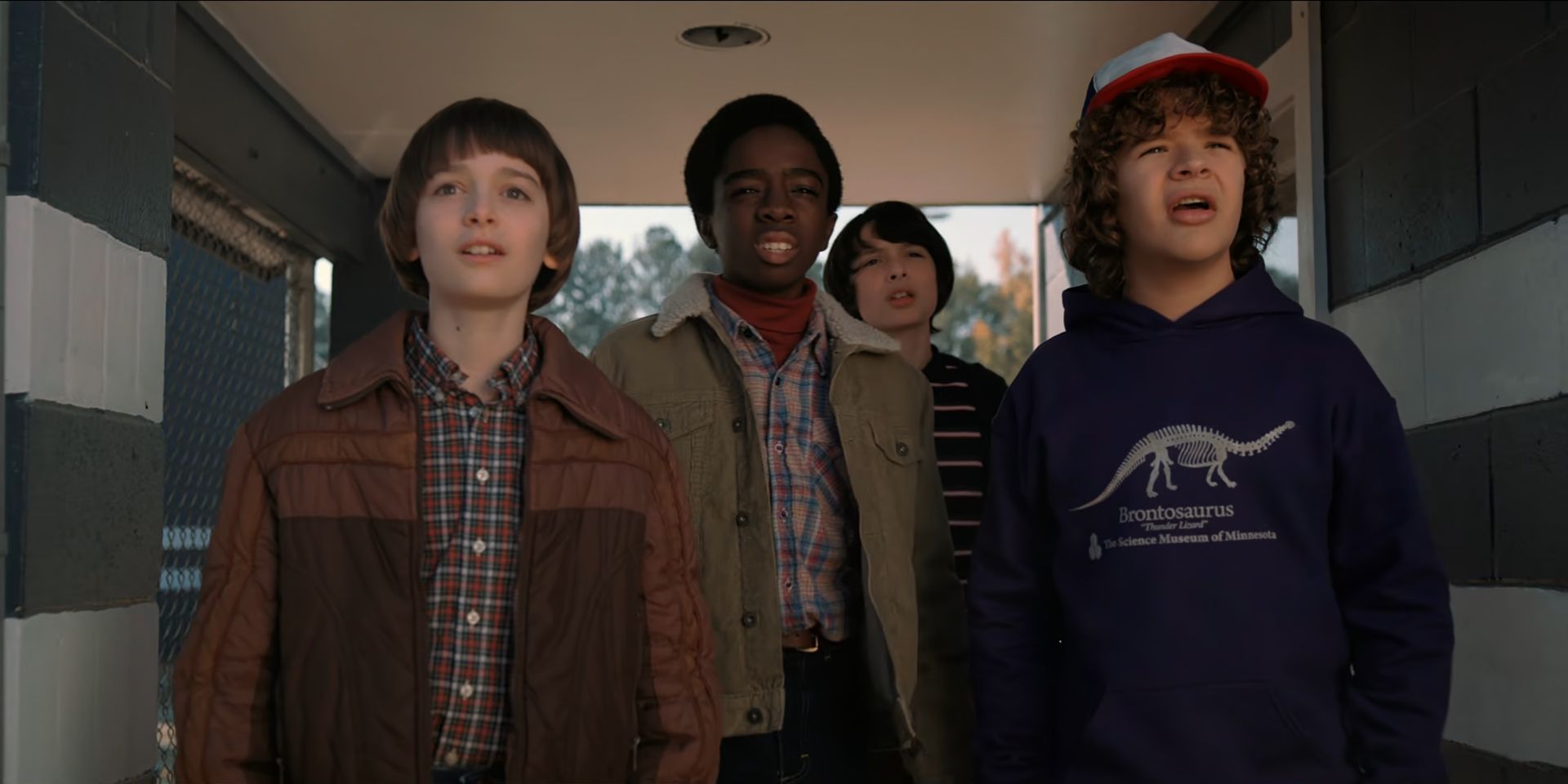
Please ‘Stranger Things,’ Give These 10 Characters More Screen Time in the Final Season!
Give them their moment before it’s all over!
Instead, the binge model makes all these moments become mere entries in lists about the seasons’ highlights. They lose most of their punch, as they just can’t be seen on their own merits, only because of how they fit into the whole. Stranger Things isn’t the only series facing this issue; The Bear, for example, is also filled with incredible moments and episodes, like the Season 2 episode “Forks.” If this episode had had a whole week to sink in, you bet there would be a lot more people rethinking their lives and blasting Taylor Swift’s “Love Story” everywhere. Sorry, but bingeing is for catching up with things you missed, not for new releases. If Stranger Things 5 is to leave an indelible mark, it needs a weekly release model.
Only Weekly Releases Can Give ‘Stranger Things’ the Impactful Sendoff It Deserves
Stranger Things was such a game-changer when it first came out and became such an era-defining cultural phenomenon, it feels wrong not to give it a proper sendoff. It deserves people talking about it everywhere, without having to compete for attention against relatives and friends (who may not care about the series at all, which is okay, too) or parties, or having its best moments getting lost like tears in the rain. It is the culmination of the series’ trajectory, something felt over months, without having its impact diluted. Again, right now it feels like Netflix is trying to be bigger than Christmas or New Year’s Eve, which is crazy (and, not to mention, heresy), and it’s the fans who will pay the price.
It also feels like Netflix is trying to have the best of both worlds by releasing Stranger Things 5 over three volumes, but that’s unfortunately not how it works. As if adding insult to injury, the current schedule is also inconsistent, giving fans a whole month for the four episodes in Volume 1, but only one week for the three in Volume 2, and then wraps up with the series finale shortly before the turn of the year. It’s like they timed it to make the worst possible arrangement for the most important holidays. With a proper weekly release, the series could also start on Thanksgiving and release individual episodes on Christmas Eve, New Year’s Eve, and January 7, with the series finale coming on January 14 and having everyone’s full attention. Keep the episodes for the holidays if you have to, Netflix, but make it one episode each, instead of three, and make them mid-season ones, not the finale.
Anyone who knows the impact of Stranger Things and how Netflix operates also knows that its final season will be a major success, break many viewership records, and be lauded as a triumph of Netflix’s model anyway. It’s important to make it clear right now, though, that all this means Netflix is still reaping the benefits of having streaming all for itself for years, not because its model is better than the rest. Things are different now, and, again, bingeing has become about catching up, and it’s not suitable for new releases anymore. Strange Things 5 will be a success regardless, but that’s because it’s simply too big to fail at this point. The only real way its final season can be an actual undeniable triumph and not face problems with the holiday release is if it gets a weekly release instead. It’s been too long, Netflix. We deserve it.
Stranger Things
Release Date
2016 – 2025
Network
Netflix
DirectorsMatt Duffer, Ross Duffer, Andrew Stanton, Frank Darabont, Nimród Antal, Uta Briesewitz
Writers
Kate Trefry, Jessie Nickson-Lopez, Jessica Mecklenburg, Alison Tatlock