Back in the late 1950s, married actors Lloyd and Dorothy Bridges bought a beachfront home along the Pacific Coast Highway. Their exact purchase price is not known, but at the time, comparable Malibu homes were selling for $40,00-$50,000. Let’s assume they paid $50,000. That’s the same as around $550,000 today. Lloyd died in 1998. Dorothy died in 2009.
Upon Dorothy’s death, the home was passed on to their three children, Jeff Bridges, Beau Bridges, and daughter Lucinda. By the time the siblings inherited the four-bedroom home, it was worth many millions.
Splitting a home is very difficult. Who gets Christmas? Who gets summer? Do kids and grandkids get to use it whenever they ask? Jeff and Beau are multi-millionaires in their own right, thanks to their highly successful acting careers. Clearly, they don’t need the money. I don’t know anything about Lucinda. Maybe she’s very rich, too, but let’s say she was not. The simple solution in many examples like this is to have none of the siblings ever use the property and instead to convert it entirely to an income-producing property.
That’s the route the Bridges siblings chose. For years, they rented the beachfront home for $16,000 in off-season months and $25,000 in summer months. Conservatively, this would have generated $200,000 in income per year. Split three ways, that would come to around $67,000 per sibling. Not bad considering they didn’t have to lift a finger to make it!
The home had no mortgage and presumably would have required very little in terms of ongoing maintenance. By far the biggest cost for the siblings would have been their annual property tax bill. But here’s the kicker – Thanks to a somewhat controversial California tax rule, their property tax bill hovered around $5,700. Not $5,700 per month. $5,700 per year. In other words, the entire annual tax burden could be covered by roughly 11 days of rent.
California Tax Codes
The reason traces back to California Proposition 13, which caps property taxes at 1% of assessed value and limits annual increases in that assessed value to 2% unless the property changes hands.
In 1986, voters passed California Proposition 58, allowing parents to transfer primary residences to their children without triggering reassessment. In many cases, that meant heirs could continue paying property taxes based on valuations set decades earlier.
Consider this hypothetical example – Let’s say your grandparents bought a two-acre undeveloped property along Lake Tahoe for a penny in the 1940s. They built a cabin, then a main house, then another small house to create a nice little family compound that became the emotional center of your extended family, hosting weddings and reunions and more. Now, let’s say the state assesses the value of this Tahoe property at $30 million based on recent comparable sales when it is inherited by you, your two siblings, and three cousins. You, your two siblings and three cousins would have to collectively earn $600,000 pre-tax every year to pay that one bill. That’s $100,000 per person. What if cousin Timmy in Florida can’t hold down a job, let alone chip in $100k a year for a Tahoe house he never visits? It gets complicated and messy fast. The 1986 law – Prop 58 – was passed specifically to prevent families from being forced out of properties they owned for generations.
Critics see something else.
They see a system where two families living next door to each other can pay radically different tax bills purely because one bought in 1965 and the other bought in 2025. They see heirs renting out multimillion-dollar properties while contributing a fraction of what newer homeowners pay toward schools, police, fire protection, roads, and libraries. In Los Angeles County, inherited properties like the Bridges home became emblematic of what some lawmakers called a “two-tiered” tax system.
The backlash eventually led to reform. In 2020, California voters approved California Proposition 19, which significantly narrowed the inheritance benefit. Under the new rules, children who inherit a home must use it as their primary residence to retain limited tax advantages. Rental and second homes generally lose the old shield and are reassessed at market value.
Importantly, Proposition 19 applies prospectively. It does not retroactively reassess properties already transferred under the previous rules. The Bridges siblings inherited their home in 2009, well before the reform. Their tax basis remained intact.
Cashing Out
Despite the locked-in tax rate, but possibly due to some unwanted attention after the Bridges siblings became the poster children of the two-tiered system, in July 2024, Lloyd, Beau, and Lucinda decided it was time to cash out. They listed the home for $9.2 million. Here is a video tour from when it was first put up for sale:
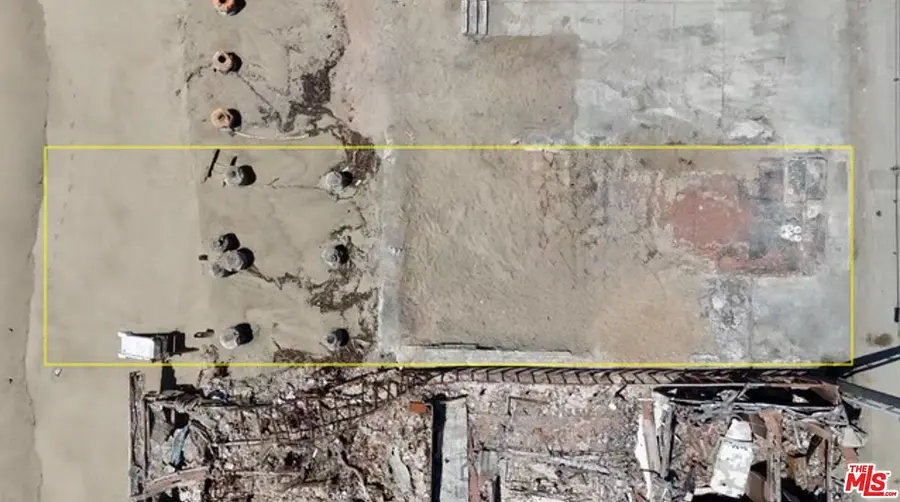
They did not get any buyers, so on January 7, 2025, they re-listed the property at a reduced price of $8.85 million. Unfortunately, January 7, 2025, also turned out to be the day the Palisades Fire broke out. That fire destroyed the home.
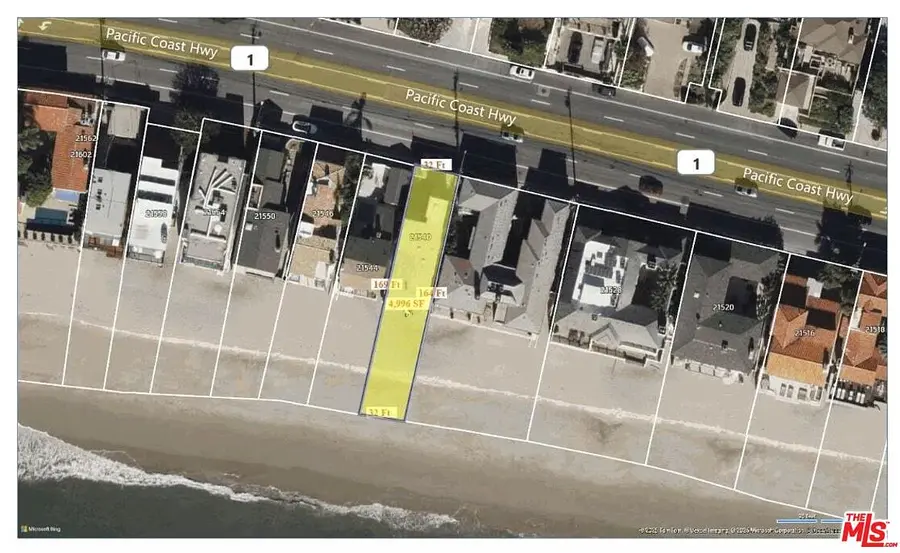
Fast forward a little more than a year, and the cleared parcel is back on the market for $4.37 million.
What A New Owner Would Face
Now consider the math for a hypothetical buyer.
Assume someone purchases the burned lot for $4 million.
High-end coastal construction in Malibu can easily run $2,000 per square foot, especially given stricter modern building codes, coastal permitting requirements, and fire-resistant standards. Rebuilding a 3,000-square-foot home would likely cost around $6 million.
That puts the all-in investment at roughly $10 million.
Because this would be new construction, not a renovation, the finished home would be reassessed at or near market value. Even assuming a conservative $10 million valuation, the new owner would face a property tax bill of about $100,000 per year under California’s 1% rule. That is nearly 18 times what the Bridges siblings were reportedly paying under their inherited assessment.
Then again, if you’re in a position to pay $10 million to build a home, $100k a year is probably like $20 a year to you and me. So maybe it all works out in the end.