What is Mario Cristobal’s net worth and salary?
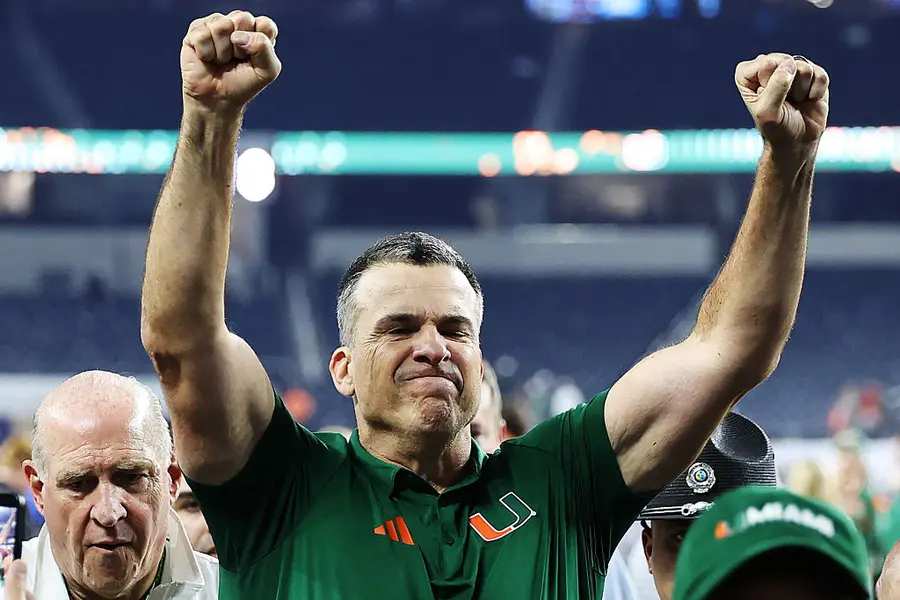
Mario Cristobal is an American college football coach who has a net worth of $30 million. A former national championship–winning player, Mario Cristobal transitioned seamlessly into coaching, where he earned a reputation as one of the sport’s most demanding culture-builders and elite talent developers. His teams are physical up front, disciplined in execution, and constructed to win the line of scrimmage. That identity followed him from his early assistant roles to head coaching success in the Pac-12 and ultimately to the University of Miami, where he engineered a return to national relevance. By leading Miami to the College Football Playoff National Championship game against Indiana, Cristobal completed a long arc that tied together his roots as a Miami alumnus with his evolution into a top-tier head coach capable of guiding a historic program back onto college football’s biggest stage.
Contracts, Salaries & Career Earnings
Mario Cristobal’s coaching compensation arc mirrors his professional rise from a graduate assistant to one of the highest-paid head coaches in college football. His defining financial leap came with his return to Miami, where he signed a 10-year, $80 million contract in December 2021, a deal designed to secure a long-term rebuild and place him firmly among the sport’s elite earners.
Cristobal’s first season under that contract produced an eye-catching number. In 2022, he earned approximately $22.7 million in total compensation. Roughly $7.7 million of that figure came as base salary, while about $14.9 million was categorized as “other compensation.” That additional payment primarily covered the $9 million buyout he owed Oregon, along with the associated federal tax liability, making the headline number unusually high for a single season.
From there, his compensation normalized to a more conventional structure. In 2023, Cristobal earned approximately $8.3 million in salary and bonuses. His annual compensation for the 2024 and 2025 seasons has been estimated in the $8.3 million to $8.5 million range. The contract also includes significant job security. If Miami were to terminate him without cause, the reported buyout obligation would be in the neighborhood of $62 million, one of the largest protections in college football.
Before Miami, Cristobal’s most significant earnings came at Oregon. After joining the Ducks as co-offensive coordinator and offensive line coach in 2017 at roughly $1.125 million, he was promoted to head coach and quickly received extensions. His compensation rose to approximately $2.5 million in 2018, $2.6 million in 2019, and $2.5 to $2.7 million in 2020 after a temporary pandemic-related pay reduction. By 2021, following a six-year extension signed in late 2020, his salary reached approximately $4.3 to $4.5 million.
Cristobal’s earlier years were far more modest by comparison. As assistant head coach and offensive line coach at Alabama from 2013 through 2016, he earned roughly $515,000 to $525,000 per year. His first head coaching job at FIU paid in the range of $350,000 to $400,000 annually early on, rising to approximately $453,000 by 2011 and 2012. When FIU dismissed him in 2012, his contract included a buyout of roughly $900,000, equivalent to about two years of salary.
Based on publicly available contract figures, bonuses, and buyouts, Cristobal’s estimated total gross coaching earnings are approximately $66.6 million. More than 70% of that total has come since he arrived at Miami, underscoring just how dramatically his financial standing has changed late in his career.
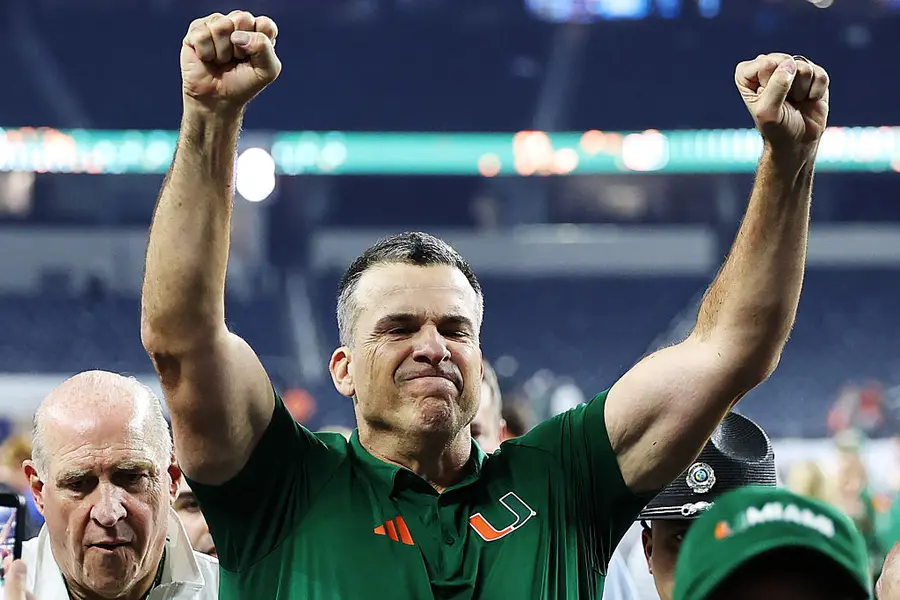
(Photo by Stacy Revere/Getty Images)
Early Life
Mario Cristobal was born on September 24, 1970, in Miami, Florida, to Cuban immigrant parents. He grew up immersed in South Florida football culture and attended Columbus High School, where he emerged as a highly regarded offensive line prospect. His combination of size, toughness, and work ethic earned him a scholarship to the University of Miami during the program’s dominant late-1980s era.
Cristobal arrived at Miami at the height of its swagger and competitive edge, an environment that would permanently shape his football worldview. The emphasis on accountability, physicality, and preparation became foundational elements of his coaching philosophy.
Playing Career at Miami
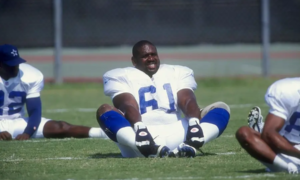
Cristobal played offensive line for Miami from 1989 to 1992 and was a starter on the Hurricanes’ 1989 and 1991 national championship teams. He earned All-Big East honors and was recognized as one of the leaders of a unit that defined Miami’s power football identity during its peak years.
Although he was selected in the NFL Draft by the Denver Broncos, his professional playing career was brief. The influence of his college experience, particularly under head coach Dennis Erickson, ultimately pushed him toward coaching rather than a prolonged NFL pursuit.
Early Coaching Career
Cristobal entered coaching almost immediately after his playing days, beginning as a graduate assistant at Miami. From there, he worked his way through assistant roles at several programs, gradually building a reputation as an elite recruiter and offensive line coach.
His breakthrough came at Alabama, where he served on Nick Saban’s staff and played a key role in developing dominant offensive lines during the program’s early championship run. Working within Alabama’s system reinforced Cristobal’s belief in structure, depth, and relentless competition at every position.
Head Coaching Rise: FIU and Oregon
Cristobal earned his first head coaching opportunity at Florida International University, where he took over a struggling program and led it to consecutive bowl appearances. Although the job came with limitations, it proved his ability to build culture and improve results.
His national ascent accelerated at Oregon. Taking over as head coach, Cristobal restored the Ducks as a physical force while maintaining their recruiting reach. Oregon won the Pac-12 championship under his leadership, reached the Rose Bowl, and consistently competed at the top of the conference. Cristobal also became known for sending offensive linemen and defensive front players to the NFL, reinforcing his reputation as a developer of pro-level talent.
Return to Miami and Program Rebuild
Cristobal’s return to Miami as head coach was framed as a homecoming and a mandate. The Hurricanes had history, resources, and recruiting advantages, but lacked consistency and national relevance. Cristobal set out to rebuild the program from the inside out.
He emphasized recruiting South Florida at an elite level, modernized infrastructure, and imposed a demanding practice culture. Miami steadily improved in the trenches, cut down on mistakes, and reestablished itself as a physical team capable of controlling games rather than relying on flash.
That approach culminated in a breakthrough season that carried Miami through the College Football Playoff and into the national championship game, where the Hurricanes faced Curt Cignetti’s Indiana Hoosiers. Miami’s run combined balanced offense, defensive discipline, and postseason composure, marking the program’s return to the sport’s biggest stage for the first time in decades.
All net worths are calculated using data drawn from public sources. When provided, we also incorporate private tips and feedback received from the celebrities or their representatives. While we work diligently to ensure that our numbers are as accurate as possible, unless otherwise indicated they are only estimates. We welcome all corrections and feedback using the button below.