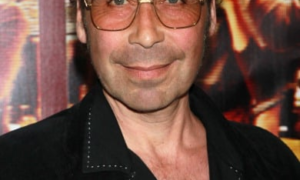
He has got to be the most underrated actor on this planet. The sparse work that Pankaj Kapoor does makes you want to tear your hair in frustration.
Not Pankaj. He’s cool as a cucumber as he explains, “I admit I’m choosy. That’s because I like to concentrate on what I’m doing. There aren’t too many great offers coming my way. So I’ve to pick and choose from the ones that do come to me. I agree I’d like to do more work. But the right kind of roles have to be offered to me. I’m not saying the roles need to be realistic all the time, though that’s what I like connecting with on screen. But if the role is larger than life, it had better go the whole hog.”
Post-Dus and the stunning performance in Vishal Bhardwaj’s Maqbool, Pankaj received a lot of offers.“Yes, the offers did come my way.But nothing that excited me. But I’ve done three films in recent years. One is Vishal Bhardwaj’s The Blue Umbrella which is a film about kids. Then I’ve done a film called Dharm about a guy who adopts a small child. . Finally there’s The Good Sharma.”
Don’t jump . Because Pankaj isn’t playing the title role. He explains, “I’m not playing The Good Sharma. It’s based on a real-life story of man who went to America as a lawyer . But ended up as taxi driver. He returns to India to try and build a school in his village. I play a character called Hanuman who’s the antagonist of the story. I look at the project in totality, what kind of a story it is, and what it has to offer me as an actor. It’s okay if the part isn’t large.”
Pankaj has more than his share of the pivotal in the long-running serial Office Office “It gave me a chance to play someone real, someone who can laugh at the vagaries of life. I played a common man who goes through all the day-to-day hardships.”
He admits that television is mired in mediocrity. “I admit tv is a far cry from the films that I started my career with , like Ek Doctor Ki Maut. It’s like reading Chekov and then going on to a comic strip. Both have their own pleasure. I mean , reading R.K. Laxman’s cartoon can be as satisfying as reading literature. As an actor, I just wanted to play different characters representing the truth about life. I didn’t want to get stuck in any one kind of image. When I came to Mumbai to join the film industry I was offered mainstream cinema. But I knew I’d get slotted in one kind of cinema. On television I had the opportunity of doing different kinds of parts.”
He recalls his days of superstardom on the home-viewing medium with affection. “There were certain things that I tried to do on Karamchand. Initially they were hated, but eventually everyone loved the characterization. I was only a theatre actor when I did Karamchand. I never knew this kind of popularity existed for an actor. A large section of the audience didn’t know who I was. Karamchand gave me an opportunity to be a household name. It was a good feeling.”
Pankaj is happy doing work sparingly. “Ideally I’d like to do four films a year. But where are those films? In the last three years I’ve done only six films. I’ve tried to be less choosy, tried to make sense of something that doesn’t make full sense. But when a project seems pointless from the start, what’s the point in doing it? Audiences will wonder why I’m doing something inane.”
And why did Pankaj say no to his brother-in-law Naseeruddin Shah when he offered his brother-in-law in Yun Hota To Kya Hota ? “It was such a huge misunderstanding. I had told Naseer I cannot possibly say no to him when he’s making his first film. I was extremely caught up with my house being done up because I was the contractor, architect and interior designer of my new home. Apparently he was told by his assistants that they couldn’t contact me. By the time he realized I was going to do it, he already had another actor for my part.Naseer is family. Secondly I hold him in great esteem as an actor. Why should I say no to his first film?”
Pankaj and his talented wife Supriya Pathak may be seen together again very soon. “She played my wife in Bhavna Talwar’s Dharm. Earlier we did the mini-series Mohandas BA. LLB together. I did everything on that serial –production, direction, scripting etc. I got tired and decided television was an unproductive medium. We look forward to doing more work together. But it has to be worth our while.”
Pankaj Kapoor has done exemplary work in numerous films including Ek Doctor Ki Maut, Maqbool and Dharm.In Tapan Sinha’s Ek Doctor Ki Maut, Pankaj played a doctor struggling against red-tapism and cynicism . Pankaj Kapoor’s National award-winning performance as Dr Dipankar Roy imparted a life so lived into the character it felt like a documentary.
In Vishal Bhardwaj’s Maqbool, Playing Tabu’s ageing unforgiving husband Pankaj Kapur as Jahangir Khan is a revelation.His expressions of steely revenge melt into displays of utter compassion for his enchanting wife.
Kapur corroborates Bollywood’s myopic disregard for its truly outstanding performers.
In Bhavna Talwar’s Dharm The debutant director’s penetrating take on how grim is the grass in the land of the divine and the crass wouldn’t have worked were it not for Pankaj Kapoor in the central role.As the head priest caught in a terrible dilemma that questions his entire ethos and commitment to society and religion, Kapoor ceases to be an actor once the camera switches on.
But it is Bhavna Talwar’s Happi that Pankaj Kapoor would be most remembered by. This is a film that will go down in history as India’s only genuine tribute to the genius of Charlie Chaplin. Doing the homage,never an impersonation, the great Pankaj Kapoor immerses himself in the character of the capricious naïve pure-hearted Happi , a chawl dweller who is the brunt of ridicule in an Iranian club where he sings and does stand-up comedy to eke out a living.He is fairly ridiculous. But happy when humoured.The sequences in the smoky club find Pankaj Kapoor at the peak of puckishness.
Pankaj Kapoor constructs a Chaplineque pathos in Mumbai’s bustling chawls where callousness is a way of life. If you can’t cope, you perish. Or otherwise you become the Joker.More than a portrait of a rapidly mutating metropolitan environment Happi shows us how cruel human beings can be to someone who is not uncorrupted enough to understand when he is being mocked.The sequence where the club gets Happi drunk and watches him perform a silly dance is heartbreaking. Pankaj Kapoor’s Happi is what Joaquin Phoenix’s Joker becomes when left to be annihilated by his own desolation.
Pankaj Kapoor’s Happi is what Joaquin Phoenix’s Joker becomes when left to be annihilated by his own desolation.
Bhavna Talwar converted her homage to Charlie Chaplin with Pankaj Kapoor as a desi Chaplin, into a black-and-white format, which she felt best suited the theme of the movie.”It seemed like a mad and expensive thing to do. But it also seemed right for the theme. If we’re doing a homage to Charlie Chaplin, we need to take it to highest threshold that a homage could go.When we saw the finished product and how profoundly sincere a tribute Pankajji had paid to Chaplin, we couldn’t resist turning it into black-and-white because that was the colour complexion of Chaplin’s cinematic world.”
Bhavna admits it’s been an arduous journey.”We had gone from frame-to-frame with our colour revision. We also got a new editor Sreekar Prasad to re-edit the black-and-white material. ”
Pankaj Kapoor’s oeuvre is not as widespread as it should be. He should be doing a lot more work than he is. Somehow he was never been allowed to take centrestage. In Richard Attenborough’s Gandhi Pankaj should have played Gandhi. Instead he ended up only dubbing for Kingsley for the Hindi version of Gandhi.