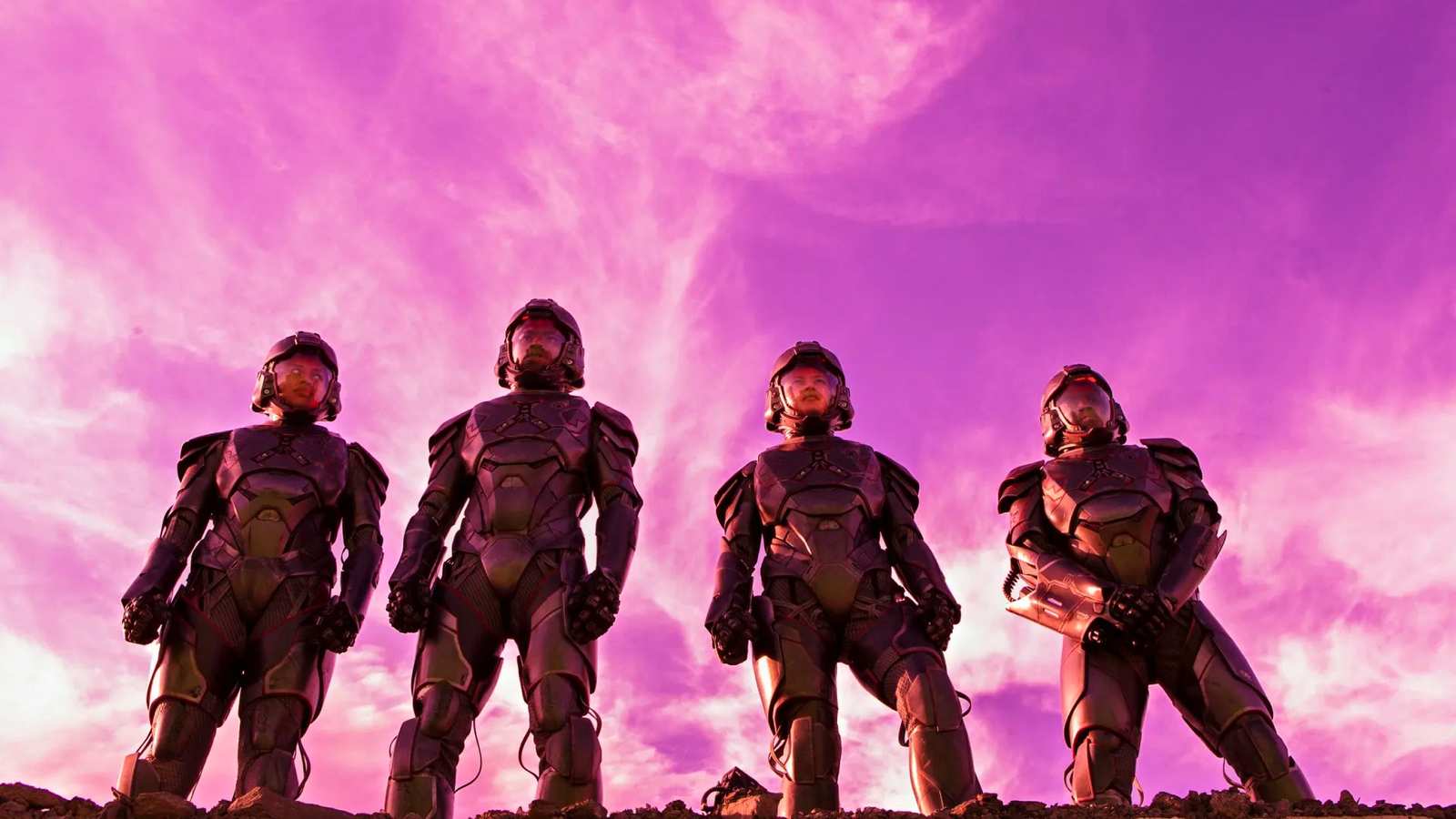
Planning for the future is a dangerous thing in TV, especially within the sci-fi genre. The 21st century has produced a number of exceptional sci-fi shows, but none have lasted longer than a few seasons. Battlestar Galactica ended on season 4. Dark received three seasons on Netflix. Even being attached to a major franchise doesn’t seem to help much, with Star Trek: Discovery concluding prematurely after season 5. Doctor Who is the rare exception, able to last over 60 years thanks to its regeneration trick.
The situation hardly improves beyond the borders of science fiction. Truly massive shows can become victims of their own success due to increasingly in-demand cast members eyeing other opportunities, inflating budgets, or actors aging faster than their characters. Shows like The Walking Dead and Supernatural prove it is possible to reach double-figure seasons, but most great series are forced to wrap up far, far earlier.
As such, planning a sci-fi show with an eye toward nine seasons would be ridiculous – an almost impossible bet that would never pay off. And yet the 21st century’s greatest sci-fi series dared to dream it was possible.
The Expanse Adopted A “One Book Per Season” Rule From The Beginning

By the time The Expanse premiered on Syfy in December 2015, James S.A. Corey’s book series already consisted of five novels, but the other four had been announced. The TV series began, therefore, in full knowledge of how long the overall story would be.
Despite being aware that completing the narrative would mean adapting a total of nine books, The Expanse took the brave step of dedicating an entire season to each book from the very beginning. At the start, this wasn’t an exact science. The Expanse season 1 covered most of book one. Season 2 finished book one and got halfway through book two, then season 3 moved up to the end of book three. The Expanse seasons 4, 5 and 6, however, more rigidly handled one book each.
The Expanse‘s TV adaptation did curate which source material it included to a degree. Some subplots were dropped, some supporting characters received smaller roles, a few minor stories combined, etc. But at no point did The Expanse ever seem to consider condensing the core story into a more TV-friendly length. To begin with that mindset is a wildly bold and ambitious thing for any series, let alone one within the sci-fi genre.
That isn’t to say The Expanse came into existence in 2015 banking on getting the full nine seasons. But it did consciously adopt a structure and pace that meant the show could only be completed if all nine seasons were granted, choosing to risk an inconclusive ending rather than making any massive deviations from the source material.
Naren Shankar addressed this during a 2020 interview with EW. The showrunner admitted, “We would be like, ‘Well, what if we only go four seasons? What if we get to six seasons?’ So we’ve crafted different versions of this… Would we be able to get to the end if we only got six seasons? Would we be able to do something satisfying at the end? And we all felt that that was absolutely possible.“
Shankar’s comments prove there was never an outright expectation that nine seasons would happen, and contingencies were always being discussed concerning how to end The Expanse at certain points along the way. Crucially, however, those conversations seem to have centered upon ending on a satisfying note, not speeding up the narrative to reach the end faster.
Tellingly, The Expanse‘s season 6 finale (currently serving as the series finale) landed pretty close to how the sixth book ends, suggesting that at no point was the series ever going to stray significantly from its “one book per season” formula, even in the event of cancellation.
How The Expanse’s Refusal To Compromise Defines It

Most adaptations would have gone in a different direction. Prime Video’s The Rings of Power bunches up Tolkien’s Middle-earth timeline to cover thousands of years simultaneously. Some adaptations take the broad strokes of a book series before doing their own thing, like The Witcher. Others cover multiple books in a single season (The Wheel of Time). TV shows that deliberately set out to cover one book per season tend to be either anthologies with little continuity between novels (Bridgerton, Reacher) or belong to the biggest franchises in the world (HBO’s upcoming Harry Potter).
For The Expanse, a relatively niche sci-fi property, to look at the nine-season road ahead and refuse to compromise its integrity by cutting the Ilus arc, or introducing the Free Navy faster, or not planting the seeds for Laconia, was mind-blowingly courageous. One could argue that The Expanse season 6’s many unresolved plot points highlight the downside of such integrity, and that’s not an unreasonable argument. At the same time, The Expanse‘s refusal to bow to pressure is one of the biggest reasons it became the 21st century’s greatest sci-fi series.
Sources: EW

- Release Date
-
2015 – 2022-00-00
- Showrunner
-
Naren Shankar, Mark Fergus, Hawk Ostby
- Writers
-
Mark Fergus, Hawk Ostby
- Franchise(s)
-
The Expanse