For the latest in their Netflix crime anthology series, Ryan Murphy & Ian Brennan have created a true Frankenstein’s Monster which tells The Ed Gein Story, but also delves into some of the pop culture the notorious killer inspired, from Psycho to The Texas Chainsaw Massacre.
Monster: The Ed Gein Story began streaming on Netflix on October 3rd.
How about we take this to the next level?
Subscribe to our newsletter for a refreshing cocktail (or mocktail) of LGBTQ+ entertainment and pop culture, served up with a side of eye-candy.
Naturally, it’s pretty immediately proven to be controversial. Like the Jeffrey Dahmer and Menendez Brothers-centered seasons before it, this re-counting of Gein’s grisly crimes plays fast and loose with the truth, often presenting historical fact alongside unfounded theories and other flights of fancy.
The result is head-spinning, though certainly compelling television, especially with a great actor like Charlie Hunnam going from broke as Gein, and the always-fantastic Laurie Metcalf as his menacing mother, Augusta.
And, as ever, Murphy & co. have found a complicated queer angle into the series to get the gays hooked (and, no, we don’t mean the fact that pop princess Addison Rae plays one of Gein’s alleged victims).
Which brings us back to Psycho, the Alfred Hitchcock classic that changed horror movies—and all of cinema, for that matter—as we know it. The film was an adaptation of author Robert Bloch’s 1959 novel of the same name, which the writer revealed was loosely inspired by Gein’s story that had come to light and created a media firestorm just two years prior to publishing.
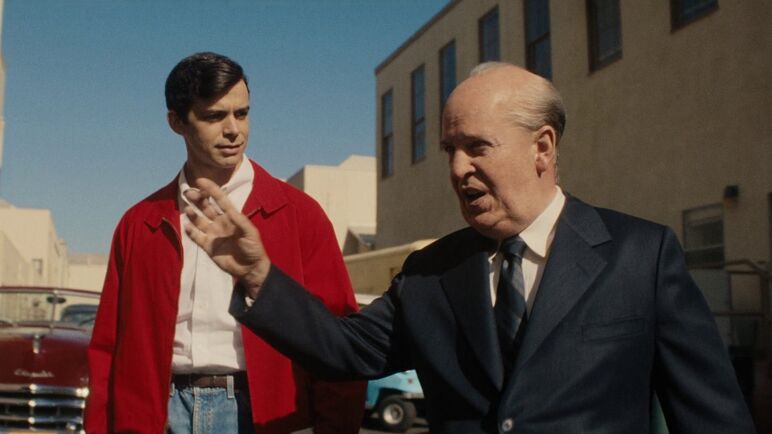
At least within Monster‘s version of reality, we actually see Bloch (played by Ethan Sandler) in conversation with Hitchcock (The White Lotus‘s Tom Hollander) about Gein, and his influence on the character Norman Bates, another psychotic killer with a fraught relationship to his mommy dearest.
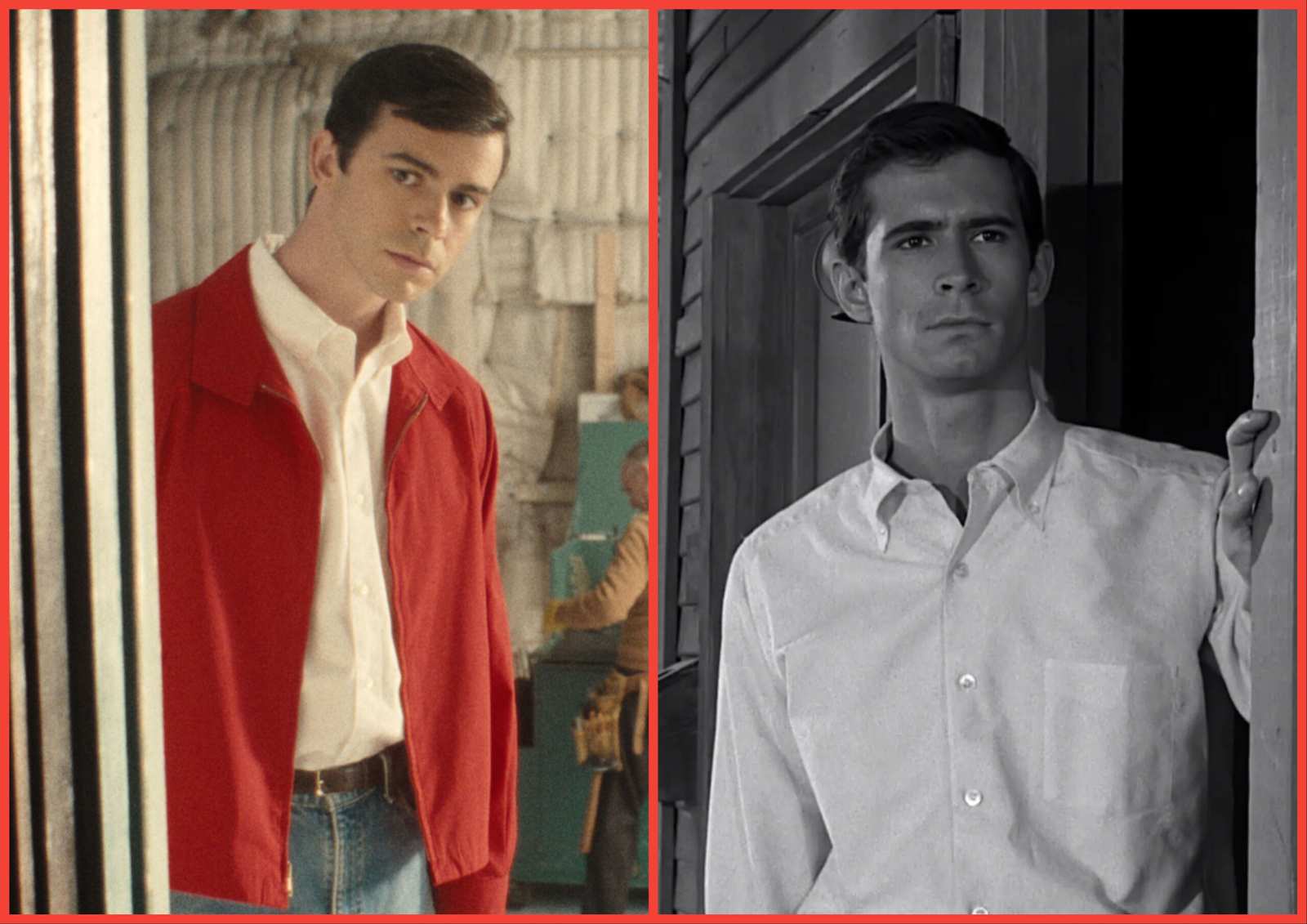
And as you’re (hopefully!) aware, Norman Bates was famously played by Anthony Perkins, the Oscar-nominated actor who remained closeted his entire life.
Related*


There were always rumors about Perkins’ sexuality, but they spiked due to his portrayal of a queer role in the 1954 play Tea And Sympathy, his Broadway debut. As a result, when he signed a contract with Paramount Pictures, they worked over time to squash his secret relationship with fellow actor Tab Hunter and fashion him in the classic dreamboat matinee idol.
Perkins quickly grew weary of being so boxed in, so he bought out the remainder of his contract in ’59, and when the opportunity to star in Psycho presented itself, he saw the perfect opportunity to buck his squeaky-clean image.

We get a sort of Cliff’s Notes version of this point in Perkins’ career in Monster: The Ed Gein Story, with the star portrayed by out actor Joey Pollari (Love, Simon). He appears in the second episode, “Sick As Your Secrets,” offering a glimpse at his relationship with Hunter (Bosch: Legacy‘s Jackie Kay) behind closed doors, as Perkins gets into drag to prepare for the role… and perhaps for a little bedroom role-play with his beau, who seems none too interested.
(For the record, there’s a brief moment where Kay’s Hunter drops towel and shows bare bum, because it wouldn’t be a Ryan Murphy series without a little male skin!)
The next day on the studio lot, Hitchcock gives Perkins a tour of a re-creation of Gein’s house, telling his star about the killer’s “base urges” society made him hide, which in turn turned him into the monster we know today: “Gein had a secret. A sexual function he could not express, and his inability to express his version of the sexual act turned inwards and transformed into sickness.”
In fact, as Monster alleges, the director hand-picked Perkins for the role because he, too, had a secret that was making him sick, drawing a direct connection between a deranged serial killer and the closeted actor.
Now, that doesn’t mean that the series itself believes the two are alike, but it certainly paints them as such—even cross-cutting footage of them each trying on women’s clothing—which has offended a number of queer viewers and isn’t exactly the most thoughtful or respectful portrayal of the late, great Perkins. Here’s what some are saying about the comparisons on social media:
Later, we’re shown one of the actor’s therapy sessions with Mildred Newman (Mom‘s Mimi Kennedy), who refers to his relationship with Hunter as sodomy and recommends electroshock therapy so he can “get better.”
Though the series muddles the timeline, Perkins really did work with Newman in the early ’70s, a proponent of conversion therapy who attempted to “cure” the star. We’re now well aware how damaging that practice is, but that implications of the episode are that, had Perkins not gone through with it, he might’ve wound up more like Gein.
At least, that seems to be what Hitchcock thinks. And, sure, maybe the creatives behind Monster: The Ed Gein Story believe their audience to be smart enough to know that’s very much not the case. But, taken at face value, the series’ attempt to draw parallels between Perkins and Gein feel offensive at best, and downright dangerous at worst.
And, besides, doesn’t Anthony Perkins deserve better than this?
Related*


Sign up for the Queerty newsletter to stay on top of the hottest stories in LGBTQ+ entertainment, politics, and culture.